Speculative Fiction
Article 15ACT IV · A FUTURE THAT DID NOT HAPPEN
Across a Broken Coast
A dispatch from an imagined future
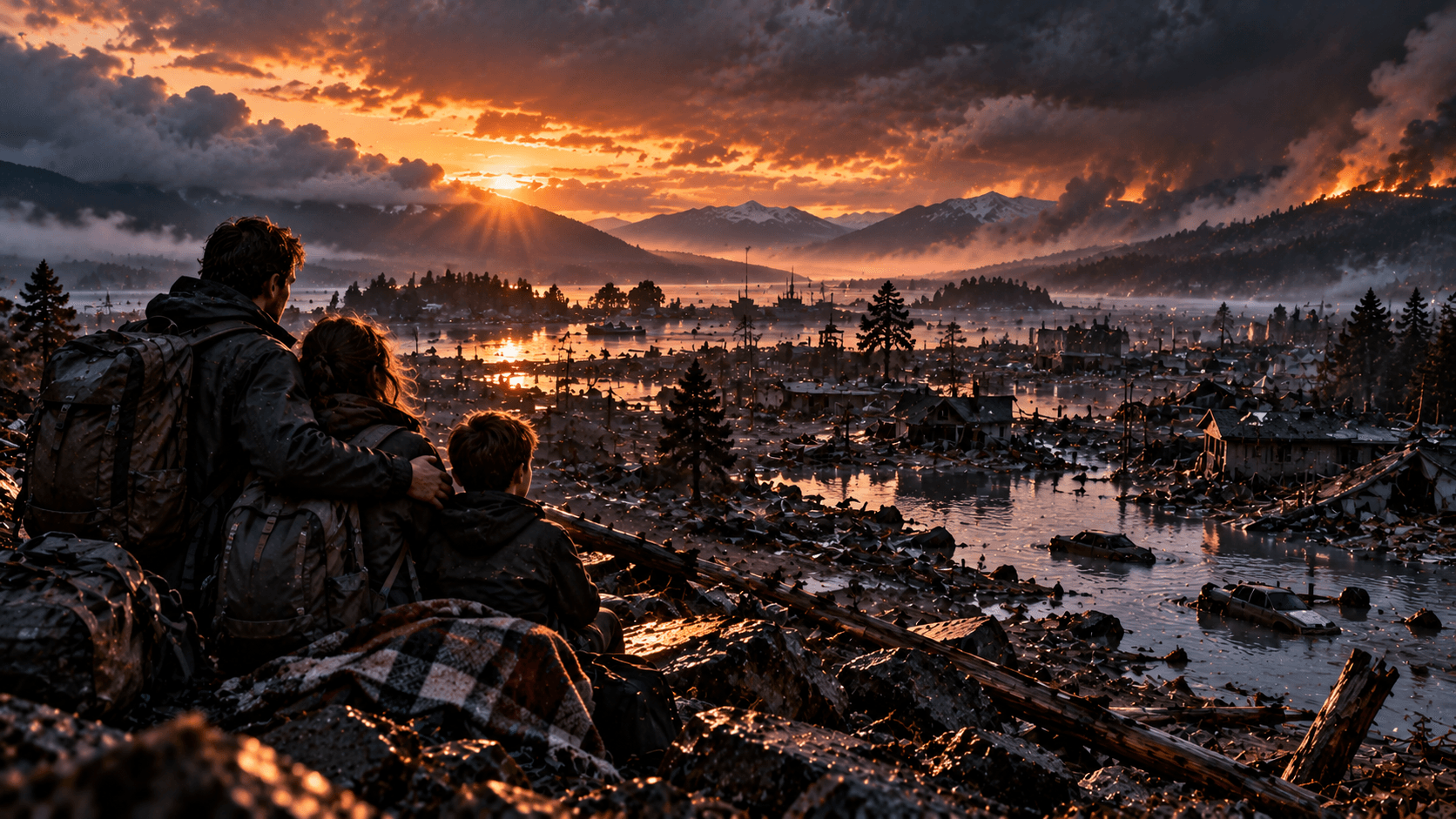
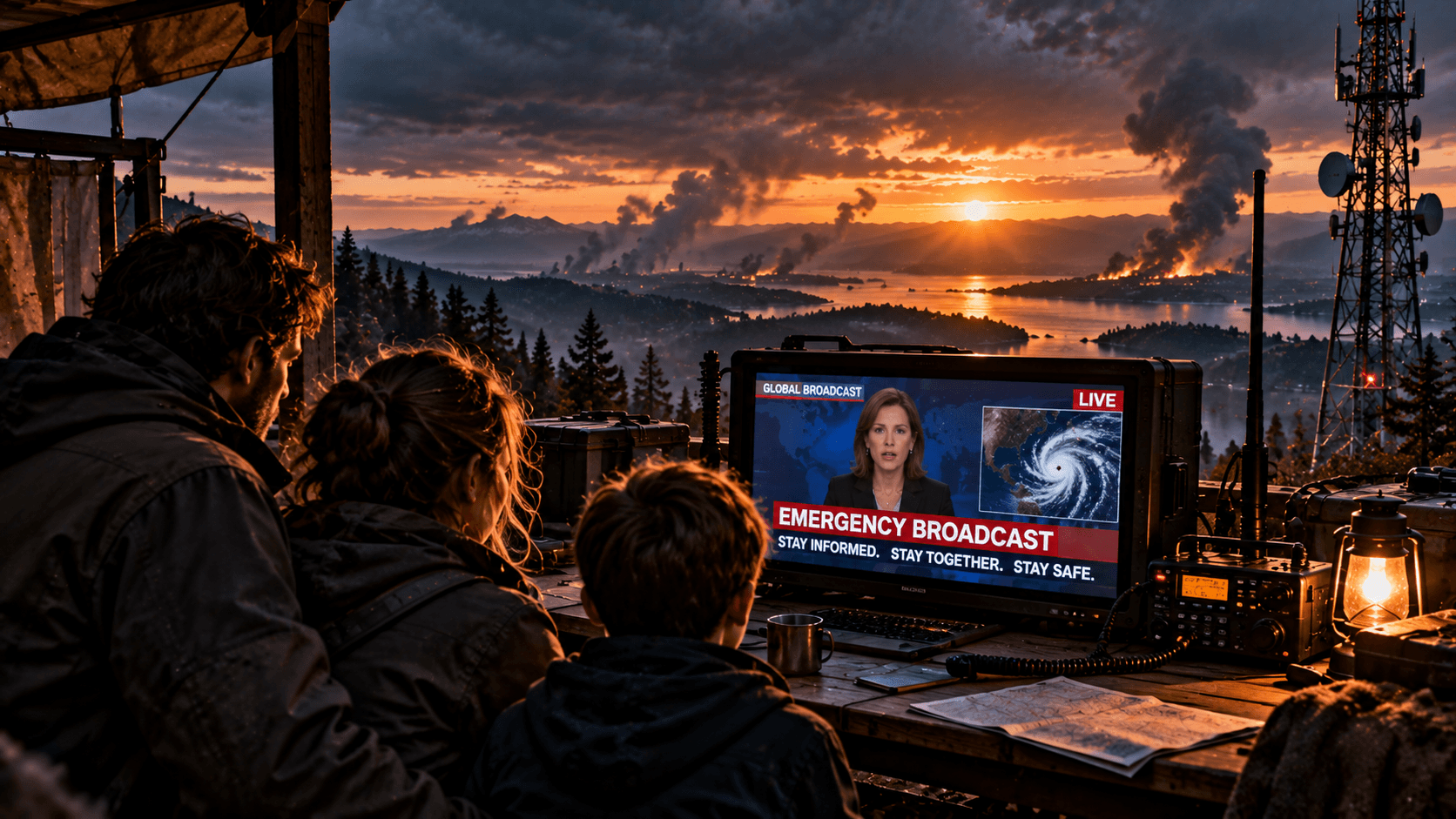
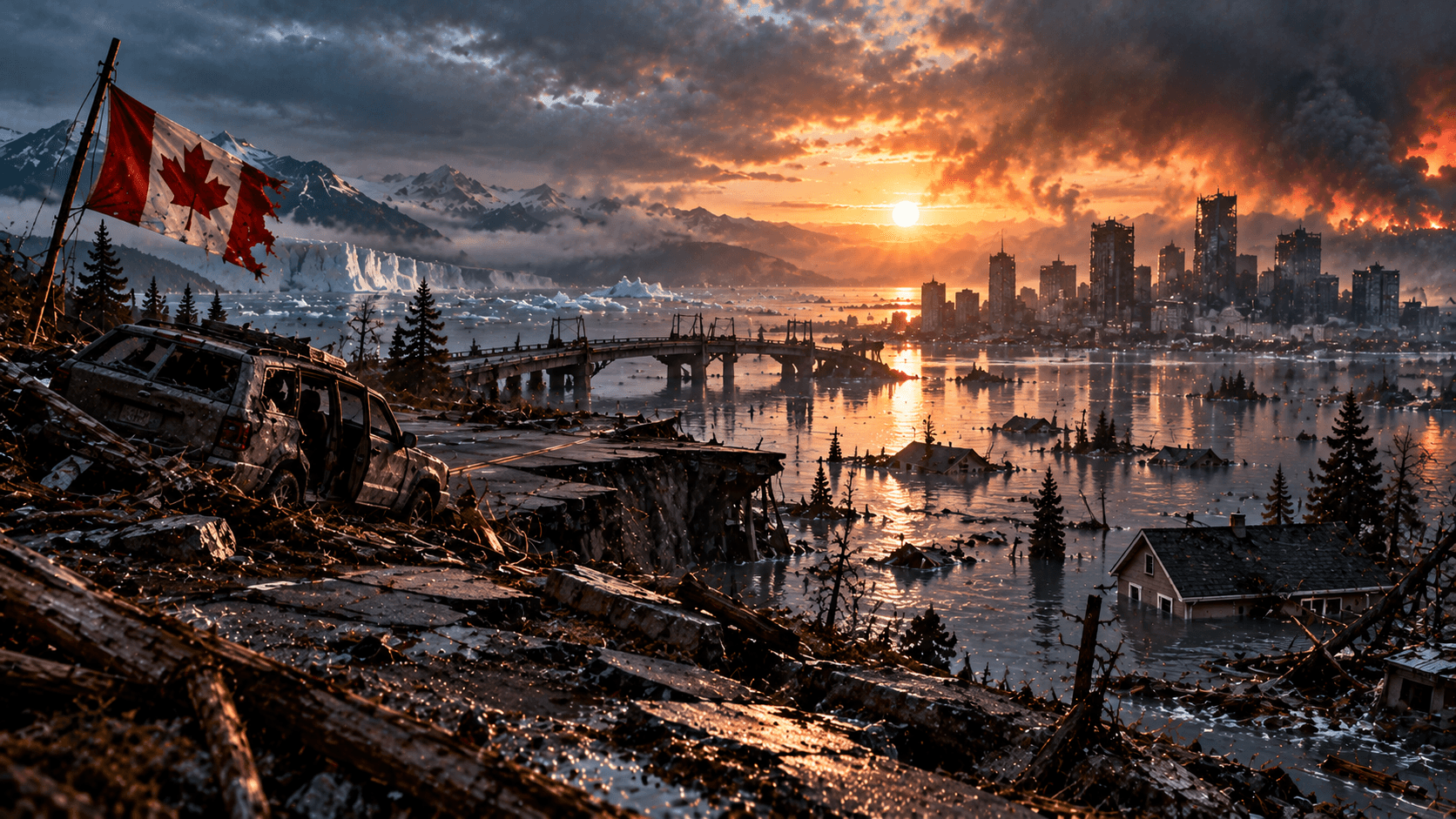
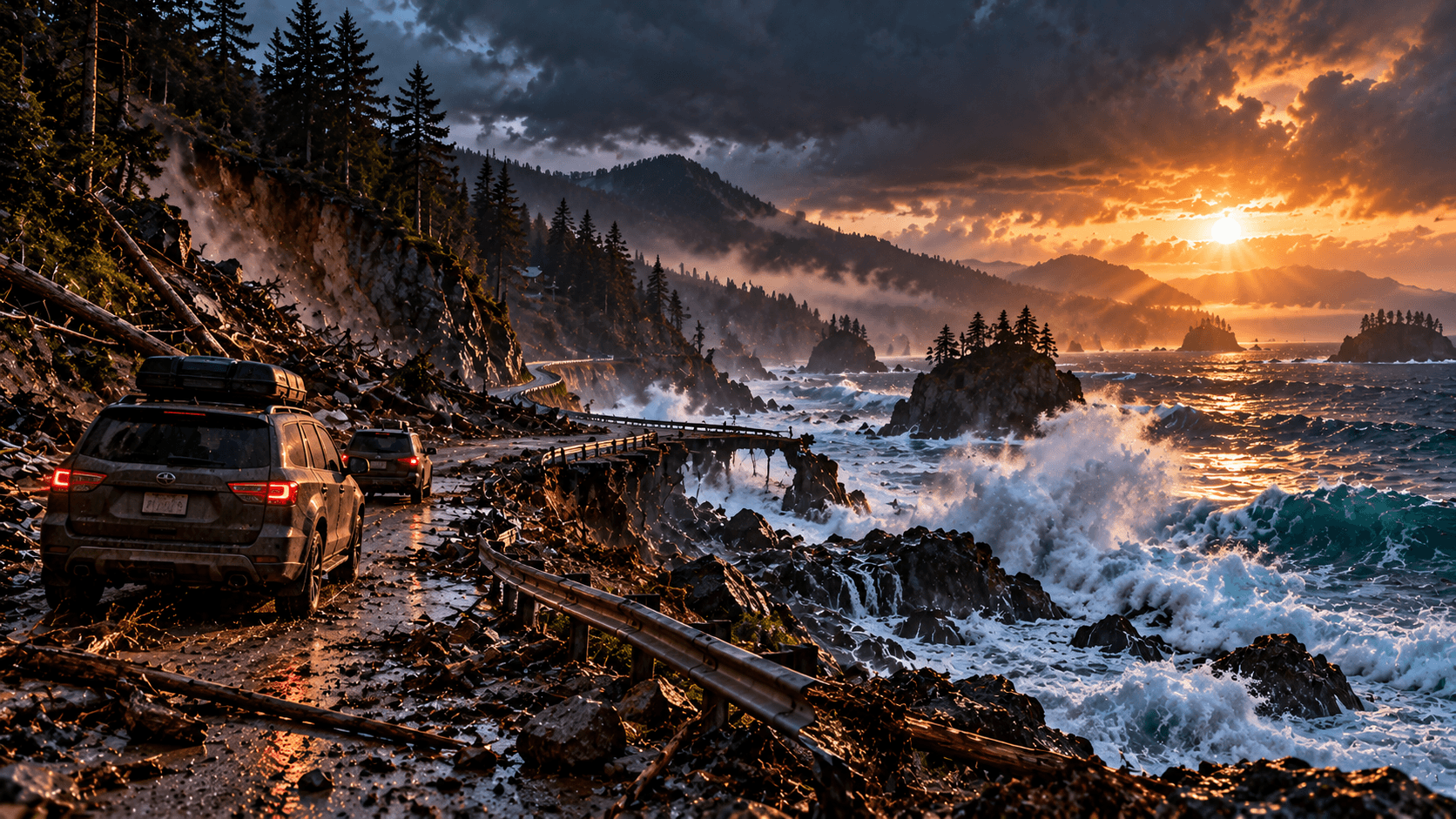
AI-generated illustration. Not a photograph of a real event.
SPECULATIVE FICTION — The events, reporting, and unnamed characters in this dispatch are imagined.
The ferry terminal was full of people who had nowhere to go and nowhere they were willing to return.
Cars stood in crooked lines beneath darkened departure boards. A woman held a child's hand and a paper ticket that no longer meant anything. Two men argued with an employee behind a locked glass door. Above them, the display still promised a sailing at 10:40. It was nearly noon. No vessel had moved since dawn.
The father and his son had driven through the night, stopping only where fuel was available. They had seen a grocery store with its windows covered in plywood, a pharmacy admitting customers one at a time, and a highway message board that said CHECK CONDITIONS without saying where. None of it looked like the end of a country. That was the unnerving part. The signs of collapse were small enough to be mistaken for temporary inconvenience, until there were too many to count.
At the terminal, a handwritten notice said all sailings were suspended pending inspection of port facilities. The notice carried no date. One worker said a vessel had struck debris. Another said the navigation system was down. Someone in the crowd claimed that a major earthquake had lowered the island by more than two feet. Nobody could say where the measurement came from. The father had learned to fear rumors, but he had also learned that waiting for certainty could cost him a day he did not have.
His daughter's last message was now thirty-one hours old.
Across the Pacific, the blockade around Taiwan had hardened into armed confrontations. Freight traffic had slowed across routes far from the fighting. In Korea, the ceasefire line was being described on foreign broadcasts as an active front. The father heard these reports in fragments while searching for a crossing. Each bulletin seemed to explain why there would be less fuel, fewer boats, fewer people willing to take a risk for strangers.
By midafternoon, the terminal staff had left. The crowd did not disperse. A few families slept in their vehicles. Others began walking the shoreline, looking for marinas, fishing boats, anything afloat. The son suggested they do the same. The father hesitated. A commercial ferry might be delayed for hours; a small boat crossing unfamiliar water in deteriorating weather could kill them before they reached the island. But the ferry was no longer an option. They turned away from the terminal together.
At the third marina, they found a man working beside an aging cabin cruiser. He listened without interrupting as the father explained that his daughter was stranded across the water. When the man finally spoke, he offered little sympathy, but he did offer to sell them the boat. It had enough fuel for a single crossing, and the price he demanded made the father's stomach tighten. With few alternatives remaining, the father reluctantly agreed. Before accepting the money, the man made one thing clear: he would not accompany them. The boat was theirs to navigate, the engine came with no guarantees, and he had no idea whether the harbor on the other side was even accessible.
The son asked if the man could at least show them the controls. For a moment it seemed he would refuse. Then he climbed aboard and spent twenty minutes explaining the ignition, the bilge pump, the radio and the fuel gauge. It was the only uncomplicated act of kindness they had received all day. Before leaving, he pointed to a paper chart folded beneath the wheel and said, 'Don't trust your phone out there.'
They waited for daylight. The father could not sleep. In the SUV, the son studied the chart under a battery lamp while the radio hissed with warnings that were already old when they reached them. Reports described damage to coastal roads, scattered power failures and emergency shelters nearing capacity. There was still no confirmed assessment of widespread subsidence. There was also no reliable way to contact the daughter.
At first light they pushed away from the dock. The water was rougher beyond the harbor wall, and the boat moved with a violence neither had anticipated. The son watched the shoreline shrink, then kept his eyes on the compass while the father struggled to hold a steady course. They did not speak much. They had reached the point where saying they were frightened added nothing useful.
Halfway across, the radio caught a broken emergency transmission. A vessel was requesting assistance near a channel marker; its position repeated twice and vanished into static. The father slowed. His son searched the grey water. They saw no boat, only waves and a low ceiling of cloud. For several minutes the father considered turning toward the call. He imagined his daughter waiting on the island, and someone else's family waiting for the vessel that had sent the distress message. He kept the cruiser on course. The decision would remain with him long after the crossing ended.
The island appeared first as a dark seam beneath the clouds. Then came the shore, and with it a new problem: the main harbor entrance was restricted. A patrol boat waved them away. No explanation carried across the water. They followed the coastline until they found a small landing with a damaged float and enough depth to approach. The son jumped first, caught a cleat, and nearly fell between the dock and the hull. Together they secured the boat.
They had reached Vancouver Island. They had not reached safety.
The roads inland were crowded with vehicles moving in both directions. At a service station, a queue extended into the street. A sign on the door read CASH ONLY, LIMIT TWO ITEMS PER CUSTOMER. An older woman told them that some neighborhoods had lost water pressure and that the university had moved students into temporary accommodations. She did not know which buildings. She gave them a street name and then asked whether they had seen her brother on the mainland. They had not.
At the university, the gates were open but the campus was almost empty. Notices taped to the residence doors contradicted one another. The father and son searched the buildings where the daughter might have been staying, calling her name down corridors lit by emergency lamps. They found a student who remembered her and pointed toward a community center being used as a shelter.
The father saw her before she saw him. She was sitting on the floor beside a row of folded blankets, holding a phone that no longer connected to anything. For a moment he could not move. Then his son called out, and she looked up. The three of them came together without a word that could adequately explain the distance they had crossed.
The relief lasted until the shelter coordinator asked whether they had a way off the island.
New tremors had been reported along the coast. Engineers were inspecting bridges, ports and sections of roadway. Some of the frightening claims circulating online were false; others had yet to be checked. There was no general evacuation order, but there was no reliable schedule for restored transport either. The father told the coordinator about the small cruiser. She said fuel was being rationed, and that several private vessels had been turned back that morning.
His daughter asked where they would go once they reached the mainland. He could not tell her. The highway east might still be open, but towns were beginning to restrict arrivals. Fuel was scarce. Communications were deteriorating. The world outside the island had not become safer while he was trying to reach her.
That evening the three returned to the landing and found the cruiser where they had left it. Someone had removed a portable fuel container from the stern. The main tank still showed enough for a return crossing, though the gauge flickered when the engine started. They gathered what little the daughter could carry and waited for the tide.
The father had crossed the water believing that finding his daughter would be the end of the ordeal. Standing on the damaged dock with both his children beside him, he understood that it was only the end of the first part.
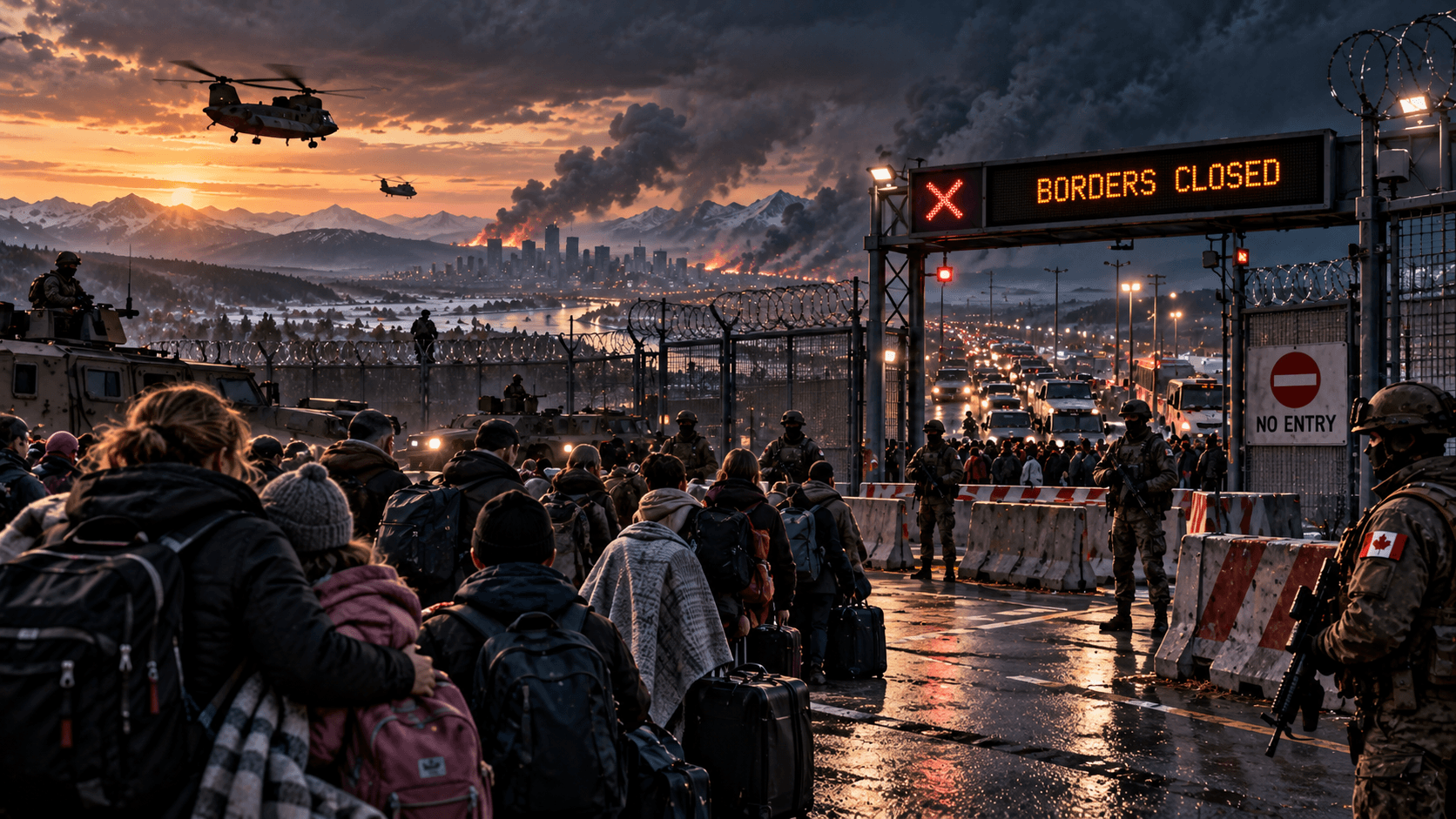
Across the strait, the mainland lights were scattered and faint. Somewhere beyond them were roads, mountains, communities and governments making decisions about who could enter and who would be turned away. The father looked at the boat, then at his children. He had found what he came for. Now he had to find a place where they could stay alive.
Continuity and editorial note
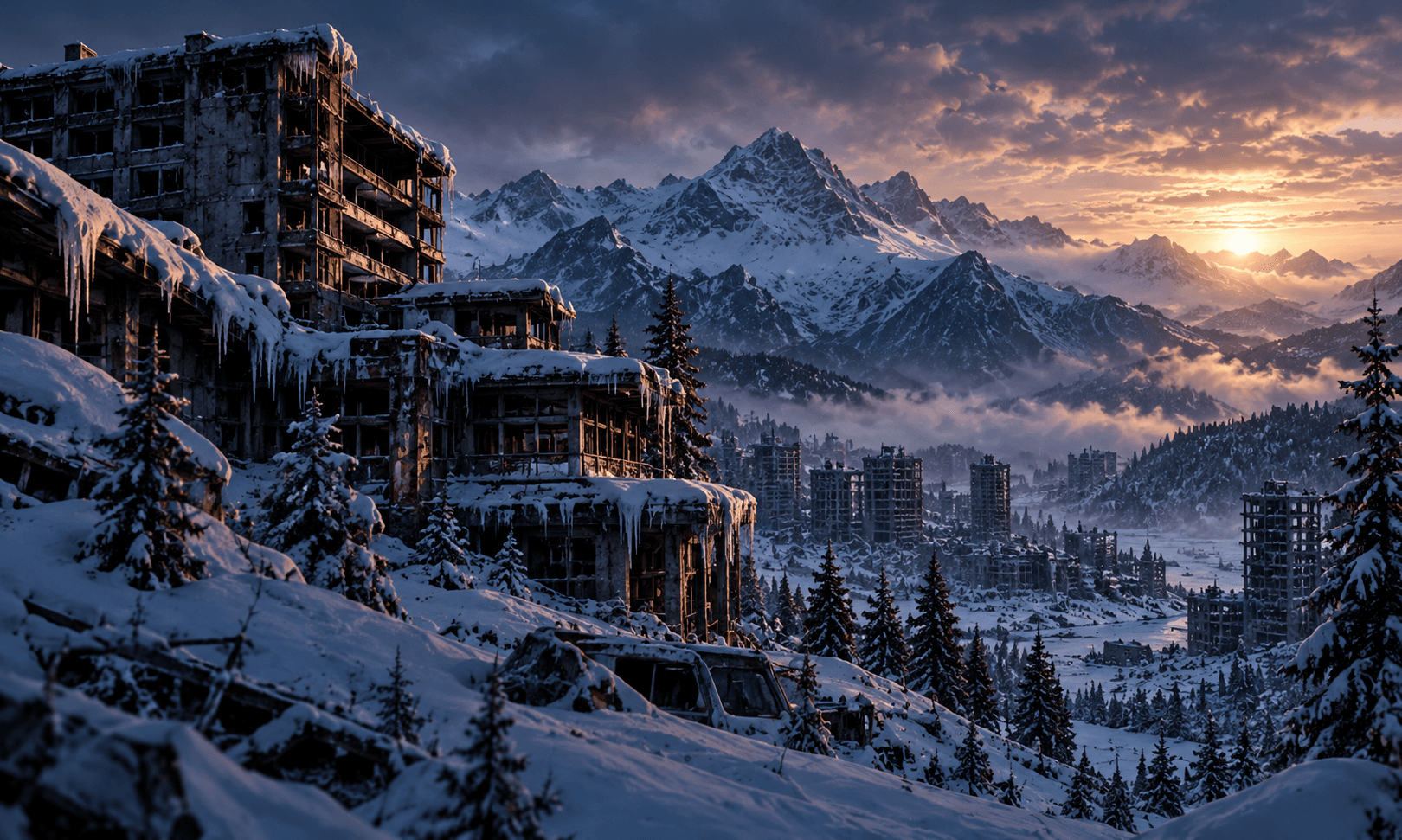
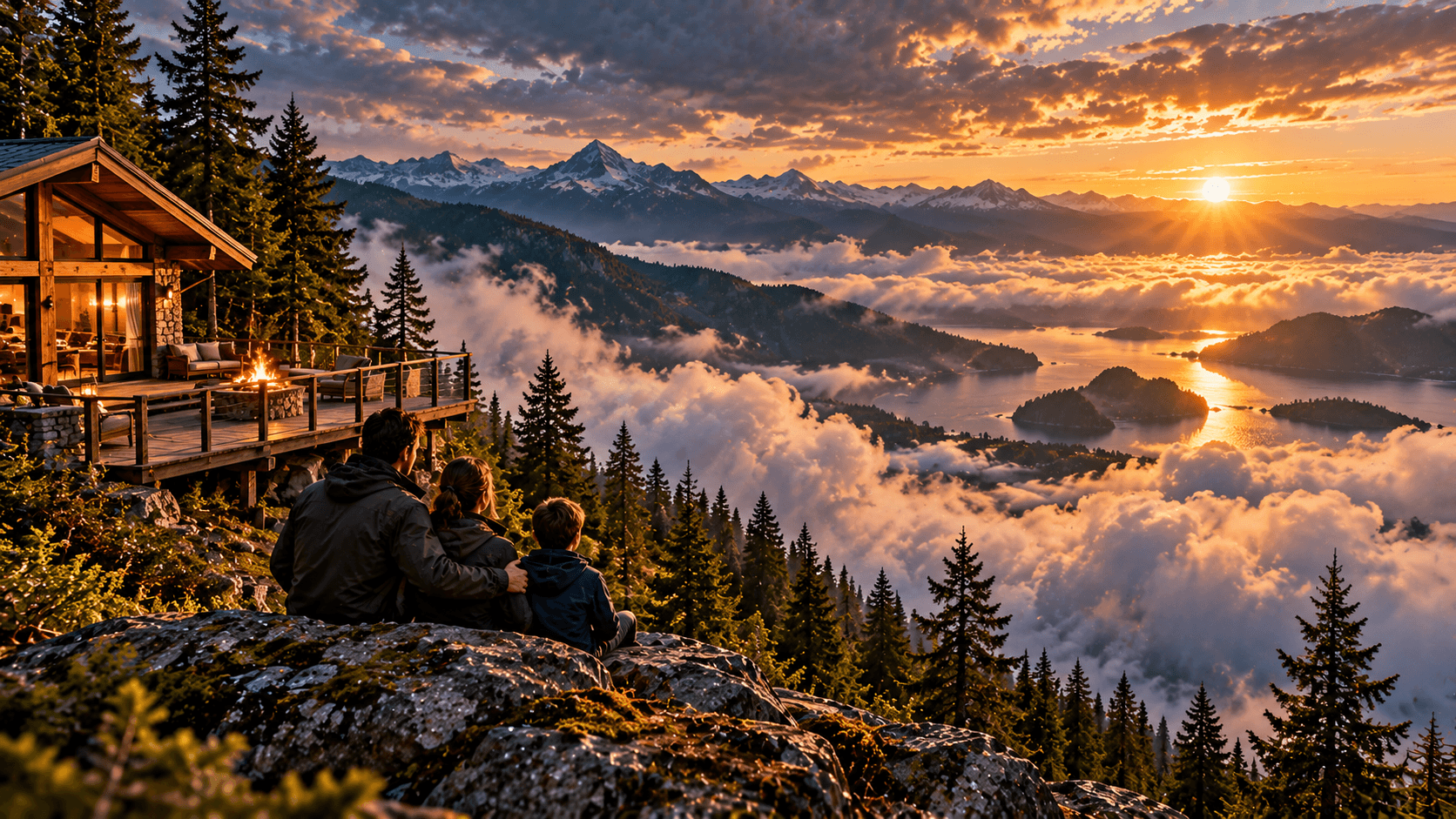
All events in this article are fictional. The father and son reach Vancouver Island together, locate the daughter, and prepare to return by boat. Rumors of major subsidence are deliberately left unverified within the story; a real Cascadia earthquake is not being reported. The return crossing, search for shelter, and mountain-resort journey remain for subsequent installments.