Speculative Fiction
Article 16ACT IV · A FUTURE THAT DID NOT HAPPEN
There Was Nowhere Left to Go
AI-generated illustration. Not a photograph of a real event.
SPECULATIVE FICTION — This dispatch describes imagined future events, not actual news.
The first person to tell them they were not welcome was a woman carrying a bucket of water.
She stood at the entrance to a mountain community in British Columbia, where a fallen tree had been dragged across the road and chained to two concrete blocks. Behind her were a dozen houses, smoke rising from their chimneys, and a small reservoir the father had spotted on an old map. It had seemed like a place where three people might survive the winter.
“We have our own families,” she said. “You need to turn around.”
The father explained that they had come from Vancouver Island, that his daughter had been stranded there, and that they needed somewhere with water. The woman glanced at the son and daughter in the back seat. Her expression changed, but the chain across the road did not move. Two men appeared on a porch above the barricade. One held a rifle pointed toward the ground.
“We’re not taking anyone else,” she repeated.
They drove away without arguing. They had already learned how quickly an argument could become a danger no one intended.
Their return crossing from the island had been worse than the journey out. The cruiser’s engine stalled twice before the mainland came into view. The daughter had held the paper chart while her brother worked the radio, trying to make sense of instructions that changed with every transmission. By the time they reached a sheltered landing, the fuel gauge was almost empty. They left the boat tied to a post and walked until they found the SUV where they had hidden it near the marina.
For the first hour inland, the father kept thinking that the worst was behind them. His children were together. The vehicle started. The road was open. Then they reached the first fuel station with no fuel, the second with an armed guard, and a supermarket whose shelves had been emptied so thoroughly that someone had taken the price labels.
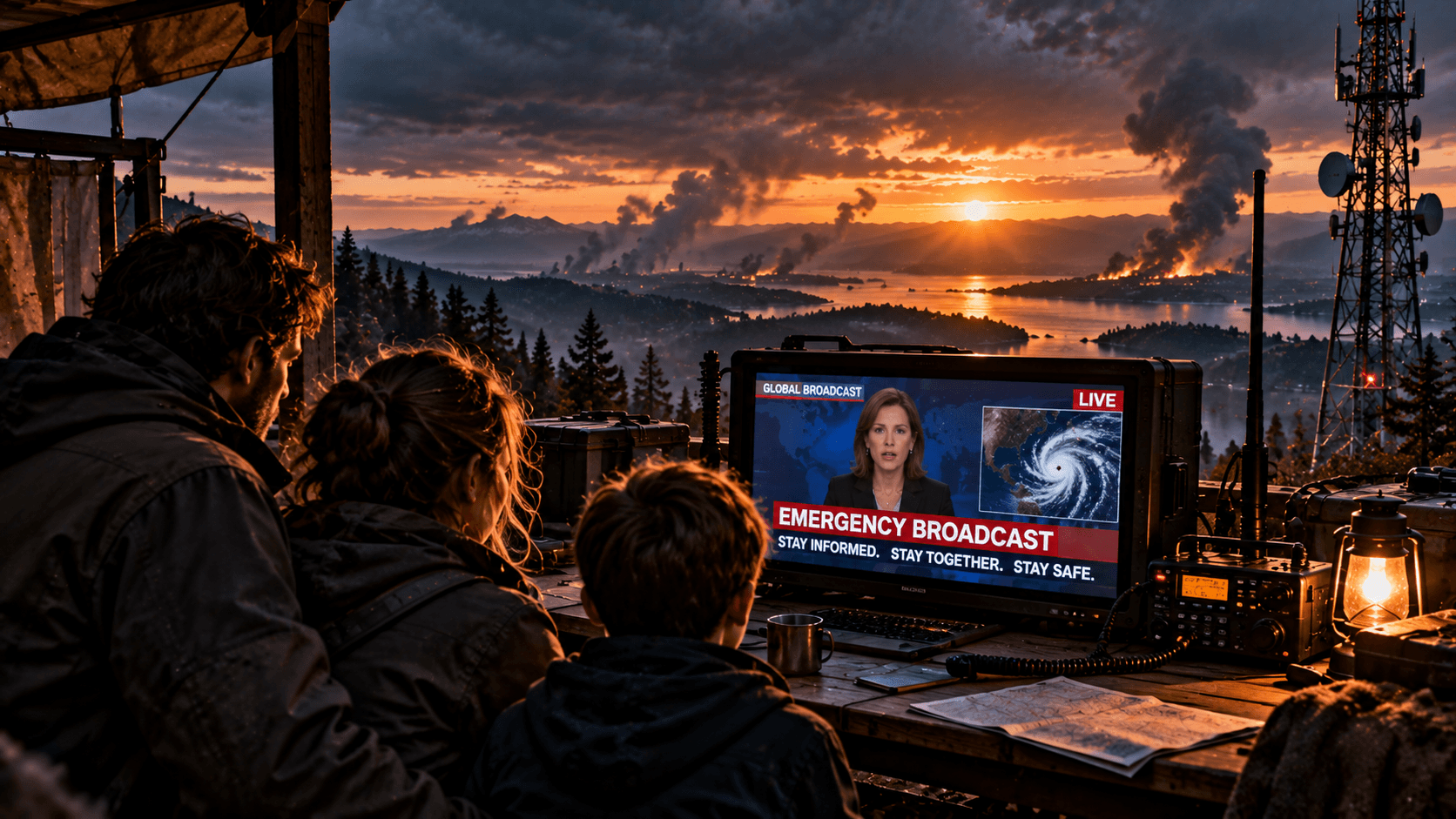
The news came in pieces. A Chinese naval engagement near Taiwan had drawn in American forces. Fighting on the Korean Peninsula had spread beyond the border; Japanese air defenses were on high alert. Commercial shipping through several Pacific routes had nearly stopped. Elsewhere, new attacks against energy facilities in the Middle East had sent fuel prices climbing again. European governments were arguing over emergency border controls while fighting intensified along parts of the continent’s eastern frontier. Every broadcast described a different crisis. Together they sounded like the same one: too many demands on systems that could no longer keep up.
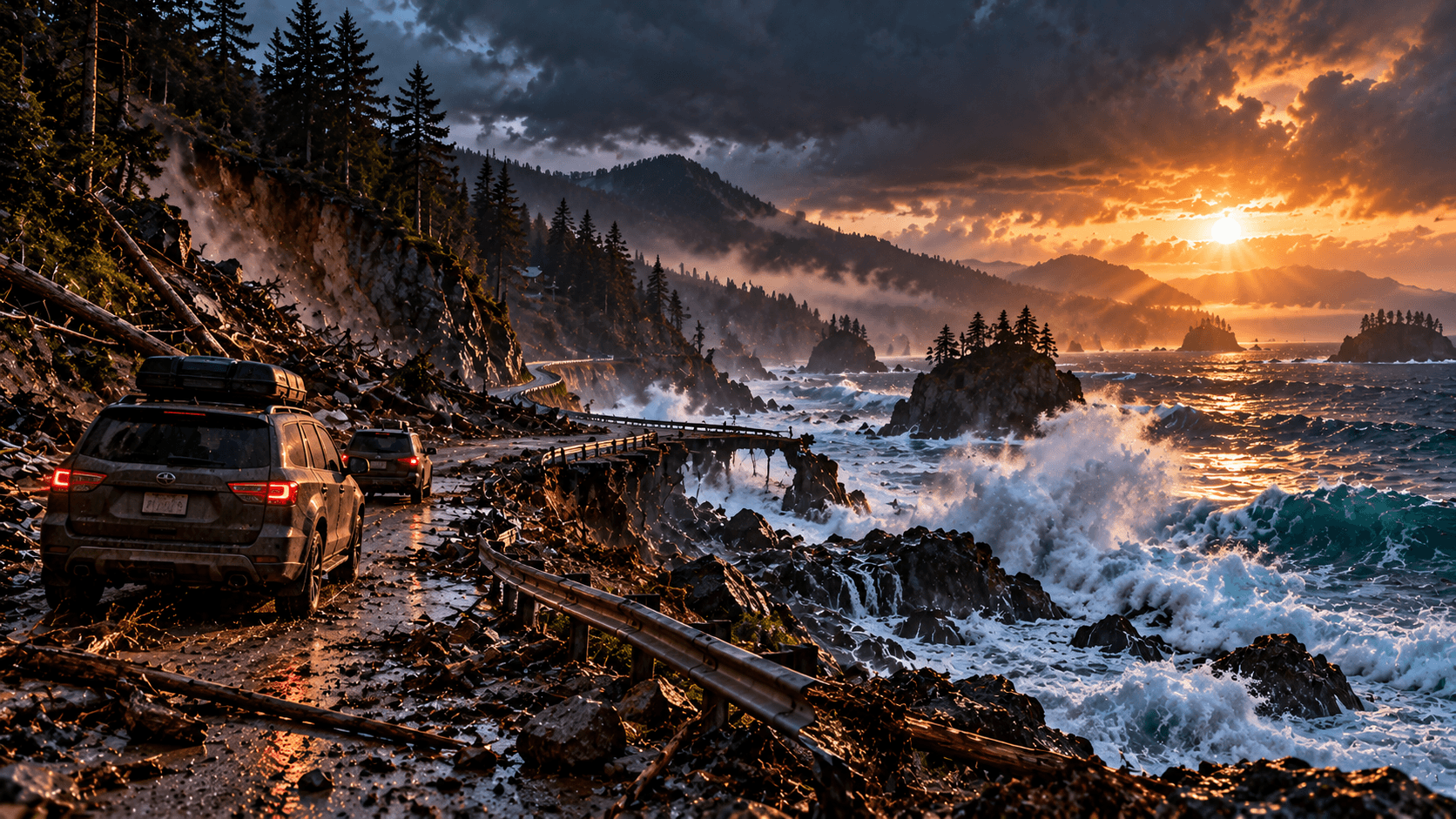
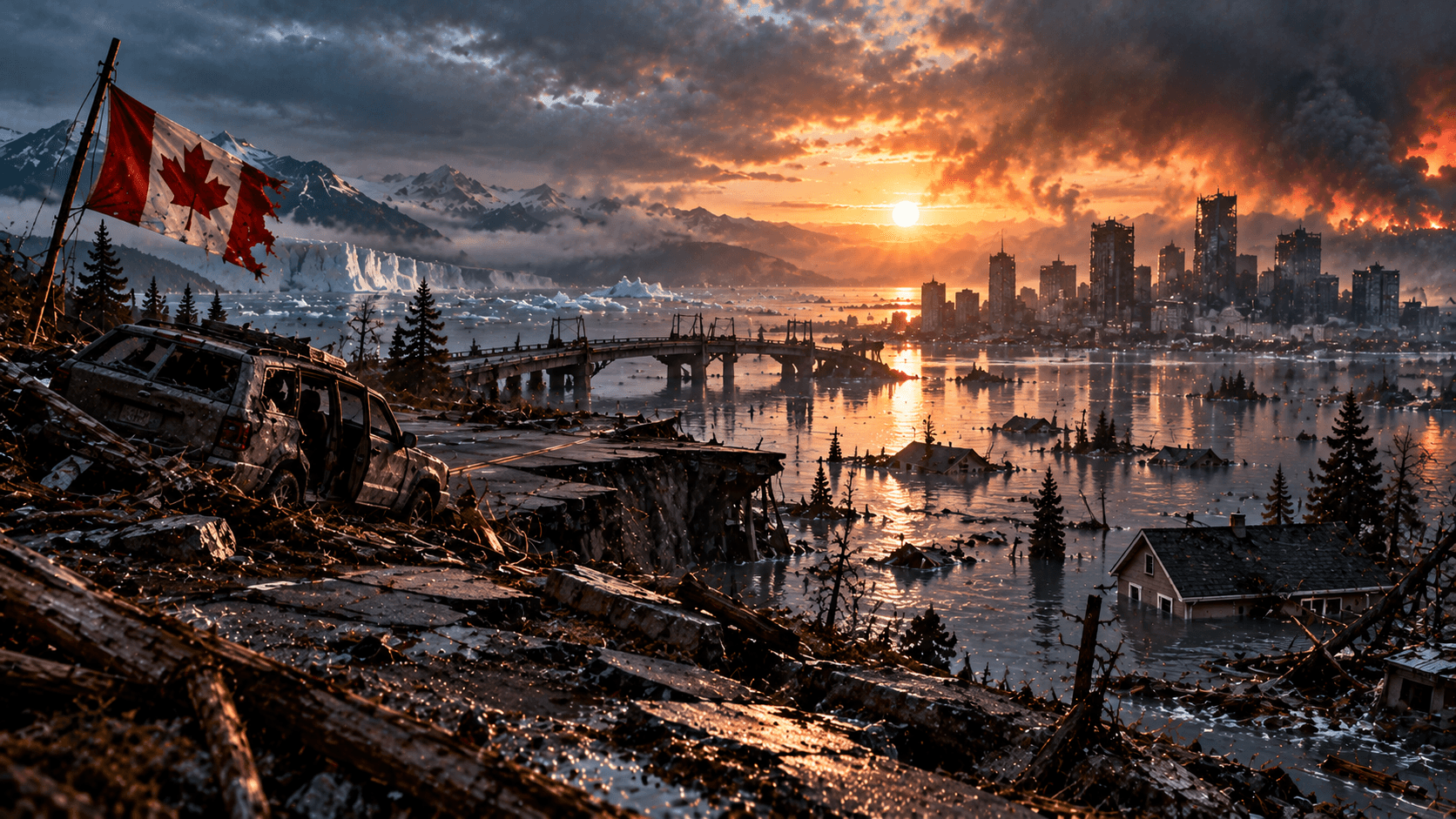
The father heard one bulletin reporting that a coastal earthquake had damaged ports and roads in the Pacific Northwest. Another claimed that sections of Vancouver Island had dropped sharply toward the sea. The daughter said people had been repeating that rumor for days. No reliable survey had confirmed its scale. But the tremors had been real enough for her to feel, and the ferry terminals were still closed. He stopped trying to decide which parts of the reports were true. Their route had to work with the roads that existed, not with the map they remembered.
They tried a second community farther inland. A man in a reflective vest directed them to a school gymnasium where dozens of people slept on mats. The building had drinking water, but its emergency generator was running only a few hours each evening. The volunteers were rationing food and could not promise shelter beyond two nights. One volunteer quietly advised them to leave before the road west was closed to incoming traffic. “It’s not that people don’t care,” she said. “It’s that everyone thinks the next delivery might be the last.”
That night, they slept in the SUV. The father put the seats down as far as they would go and gave his coat to his daughter. The son insisted on taking the first watch. In the dark, the three listened to the sound of other vehicles arriving and departing, doors closing softly, engines idling for warmth. Nobody approached them. Nobody needed to. The fear of being noticed was enough to keep them awake.
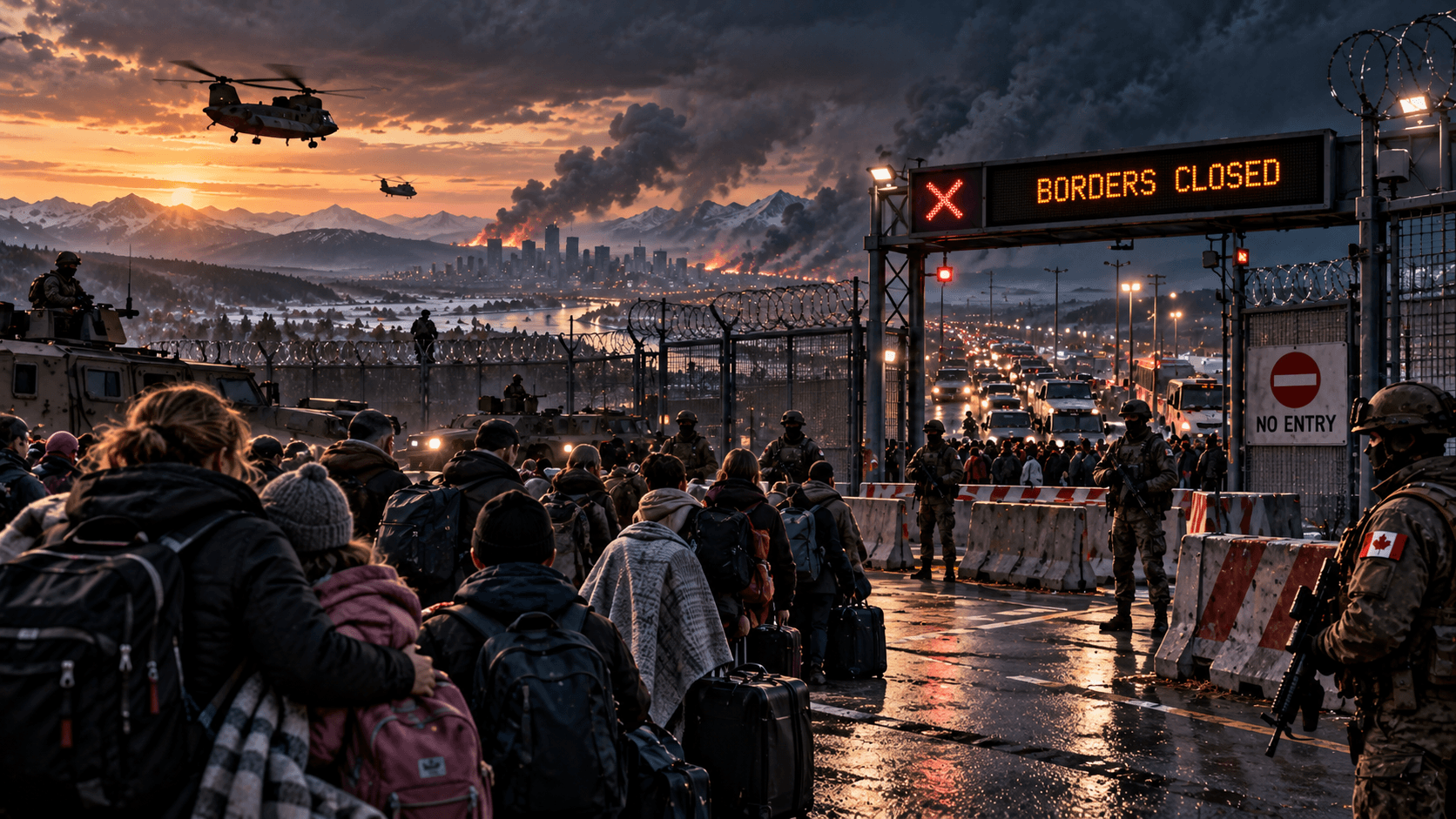
By morning, the road toward the mountains was packed with traffic moving both ways. Some people were fleeing the cities; others were returning because the places they had hoped to reach were already full. A truck driver told them that authorities were considering fuel allocations for emergency services and freight only. At a rest stop, a family traded batteries for powdered milk. Someone had written NO MORE ARRIVALS across a roadside sign in black paint.
The father had once believed that distance from a city meant safety. Now he understood that every valley with a road, a river and a few houses had been noticed by thousands of other people. The most obvious refuges had become the first places to fill.
In the afternoon, a new warning interrupted the radio’s steady hiss. Military authorities in several countries were raising their alert levels following reports of attacks on strategic facilities. The announcer did not say nuclear weapons had been used. Then a second station claimed that a low-yield nuclear device had detonated near a military installation overseas. A third station called the report unconfirmed. The father turned the volume down before his daughter could ask what it meant.
She asked anyway.
He told her they did not know. It was the only answer he trusted.
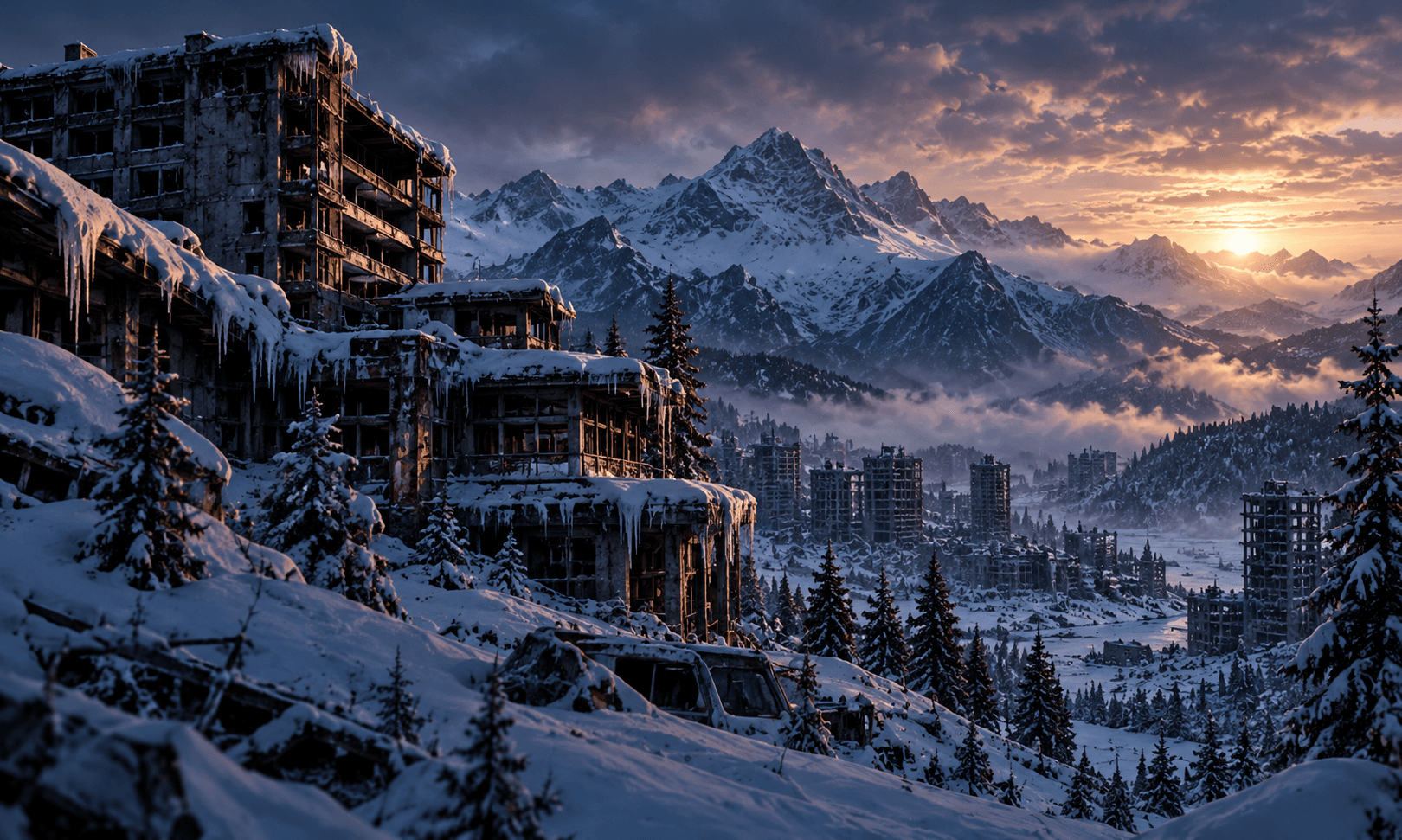
As the sun dropped behind the mountains, the son unfolded a regional tourist map they had found at a closed visitor center. He pointed to a ski area high above the main valley. Its gondola ran from the base to a cluster of buildings near the summit. The road up was seasonal, the resort remote, and the map showed a small hotel, a restaurant and a first-aid station.
“It might be empty,” the son said.
“It might not,” the father answered.
They studied the contour lines. The summit would be colder than anywhere they had stayed, and the buildings could have no heat, no food, no running water. If the gondola was out, reaching them would mean a long climb through snow. But the father remembered something else from visits to ski resorts years earlier: commercial kitchens, storage rooms, emergency supplies, perhaps a backup power system. Not a guarantee. A possibility.
They turned onto the access road before dark. At the lower parking lot, a line of gondola cabins hung motionless against the sky. The ticket windows were boarded shut. No lights shone from the base lodge. Snow covered the tire tracks that might once have led toward the service road.
The son walked to the gondola station and tried the doors. Locked. He came back rubbing his hands together and looked up the mountain. Above the trees, the upper terminal was only a dark shape against the snow.
They drove the SUV up a narrow maintenance track until the wheels began slipping on ice. The father backed carefully into a shallow gully screened by spruce trees, hoping the vehicle would be hidden and usable if they had to retreat. They took food, blankets, a flashlight, the first-aid kit and what water they could carry. The daughter looked at the slope ahead and said nothing.
Then they started walking.
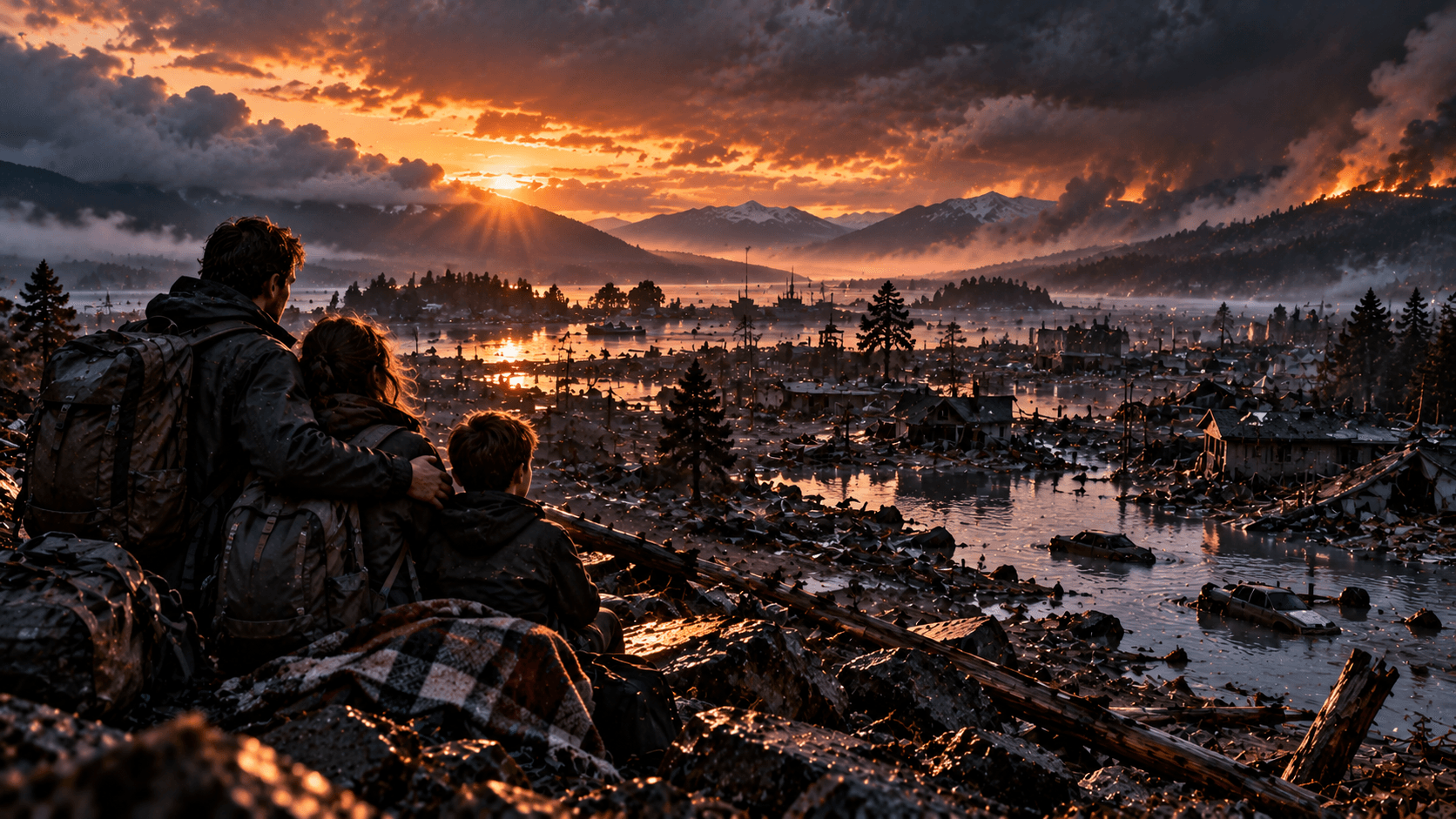
They were not looking for a fortress. They were looking for a door that would open, a roof that would hold, and enough time to decide what came next. Behind them, the valley disappeared into evening. Above them, the mountain gave no sign that anyone was waiting—or that anyone would help if they were.
Continuity note
Fictional sequence: the father, son and daughter return to mainland British Columbia; they encounter overcrowded or closed communities, hear disputed reports of overseas nuclear use, find an abandoned gondola base, hide their SUV in a gully and begin climbing on foot. The summit buildings and winter shelter are reserved for Article 17. Rumors and radio claims within the story are not factual reporting.