Speculative Fiction
Article 17ACT IV · A FUTURE THAT DID NOT HAPPEN
Sanctuary Above the Clouds
AI-generated illustration. Not a photograph of a real event.
SPECULATIVE FICTION — The events and unnamed characters in this dispatch are imagined.
By the time they reached the summit, the snow had erased most of their footprints.
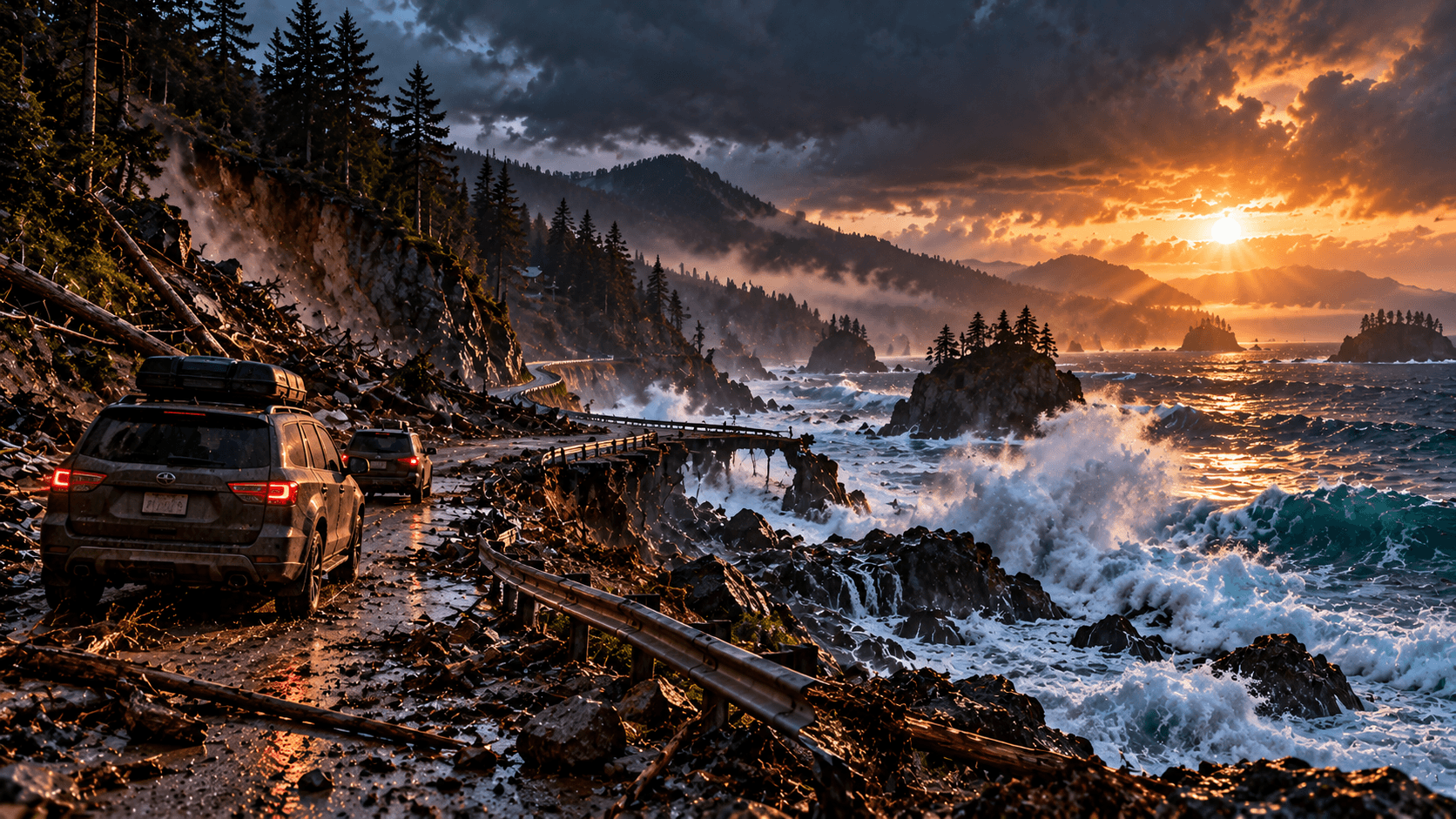
The climb had taken nearly six hours. The father had expected a difficult walk from the abandoned SUV to the upper station; he had not expected the cold to make every decision feel urgent. His son carried the heavier pack, though he had stopped pretending it was easy. His daughter had slipped twice on the last steep section. Each time, they had waited until she was standing before allowing themselves to look down at the dark line of trees below.
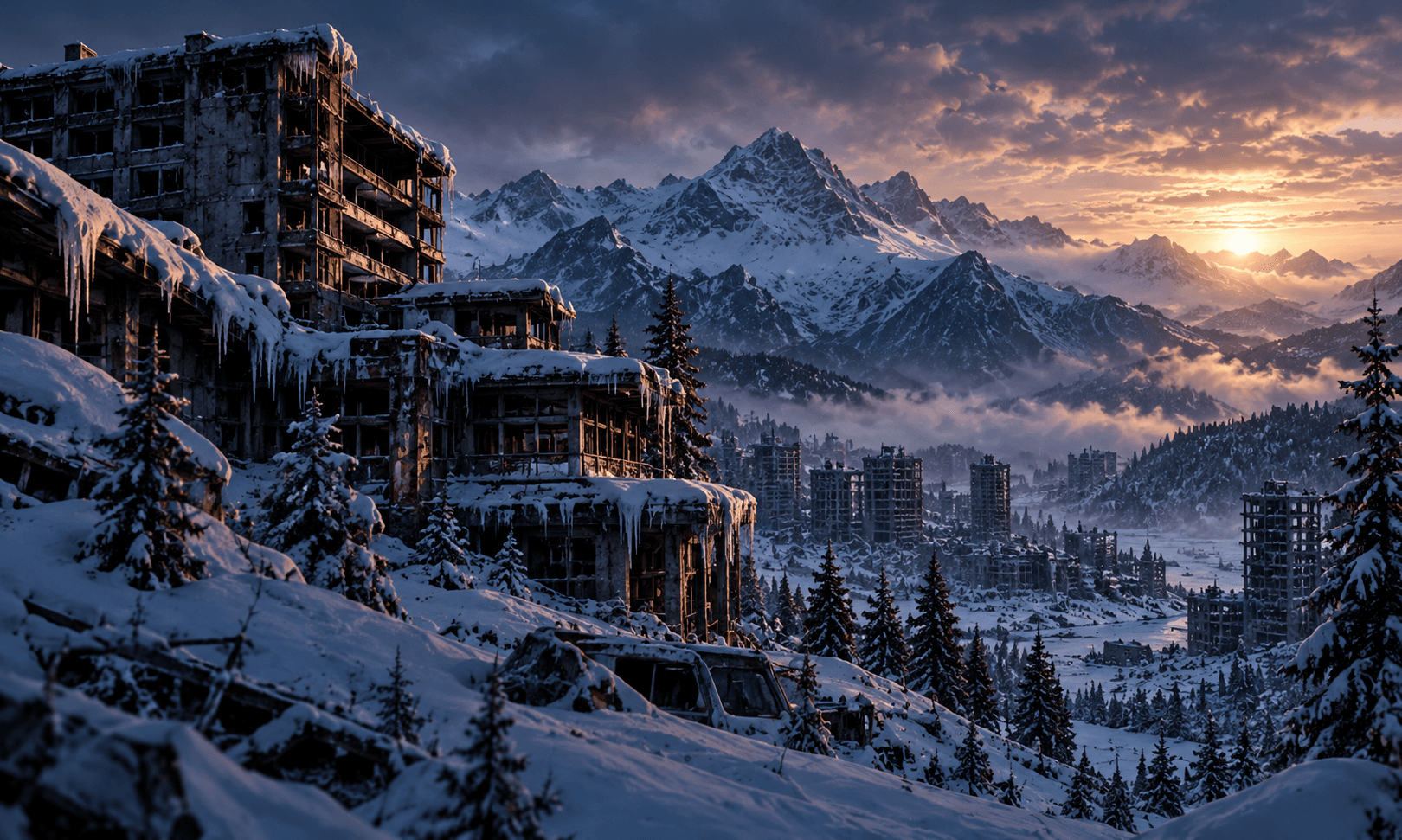
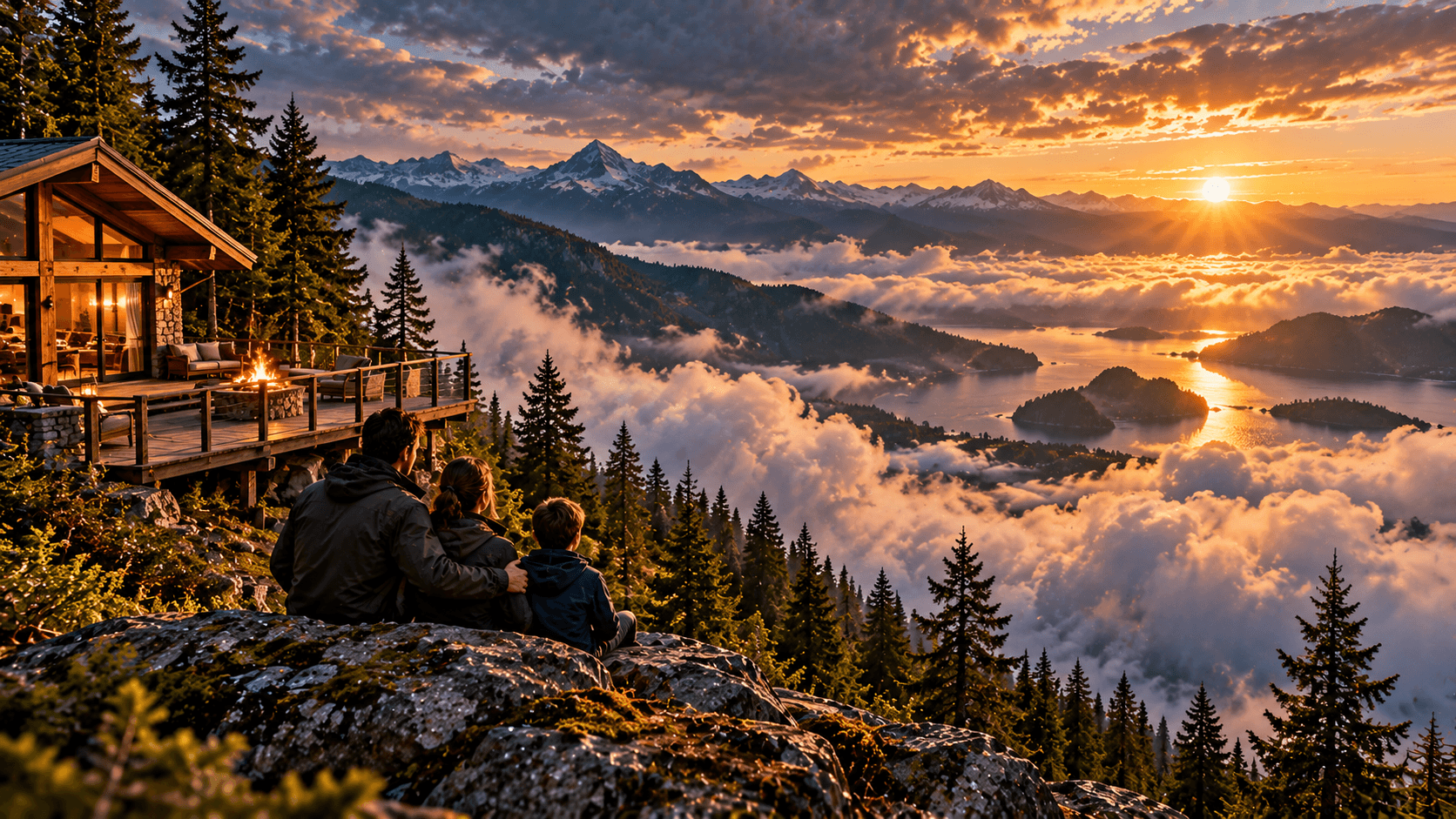
The resort appeared without warning. One moment there was only the slope and the wind. The next, a broad roof emerged from the white, then the steel towers of the silent gondola, then a collection of buildings arranged around a plaza half-buried in drifting snow. No lights shone behind the windows. No smoke rose from the chimneys. It looked less abandoned than paused, as though the staff might return from lunch and resume the day.
They stayed outside for several minutes, listening. In the world below, strangers had become a danger as often as a source of help. The father had begun to fear occupied buildings more than empty ones. His son circled the nearest wall and came back shaking his head. No tracks. No voices. Nothing moving except a loose sign striking a post in the wind.
There were four principal buildings: a small six-unit loft-style hotel, a restaurant chalet, a larger cafeteria and a safety-and-first-aid building. The father made them search the entrances together. It would have been faster to separate, but speed was no longer worth the possibility of losing sight of one another.
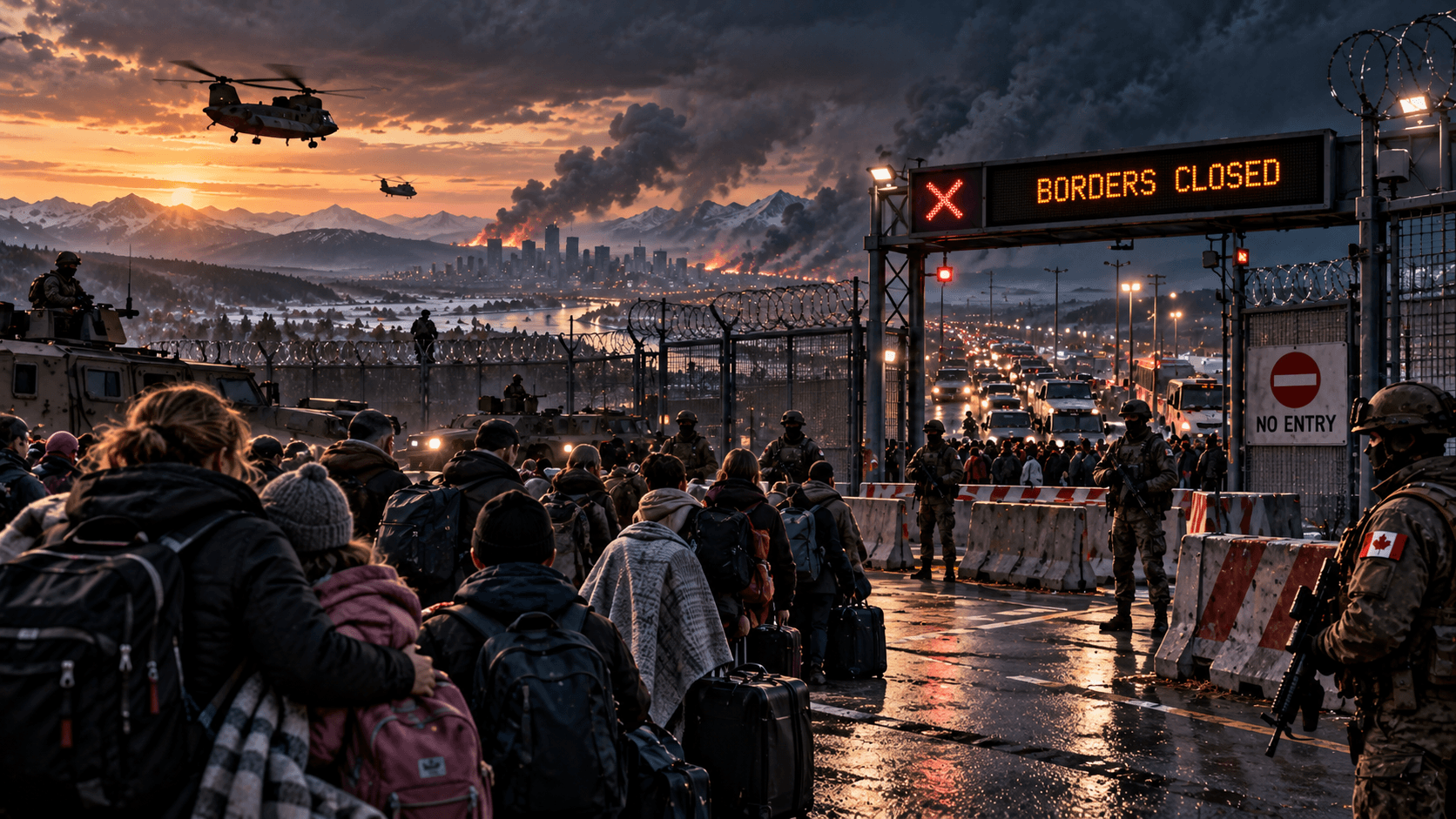
The cafeteria doors had been forced once and then jammed shut. The chalet's dining room was untouched, its tables still set with menus beneath an accumulating layer of dust. In the first-aid building, cupboards stood open and a noticeboard listed emergency contacts whose numbers might as well have belonged to another century. The hotel was different. Its doors were locked, the windows intact, and a bank of rooftop solar panels was visible through the blowing snow. Inside were six sleeping units, a small kitchen and a restaurant space, all connected by one corridor. For the first time since the crossing to Vancouver Island, the father could imagine closing a door and knowing who was on the other side.
They chose the hotel before nightfall. Choosing it was the easy part.
The solar batteries still held a charge, but no one knew how long they would last. A faucet coughed air before delivering a thin stream of water that stopped after thirty seconds. The heating controls lit up, then displayed a fault. The refrigerator was cold only because the building itself was cold. The father stood in the kitchen, looking at equipment built for visitors who arrived with reservations and left before the weather turned. None of it had been designed for three people who might have to survive an entire winter without a delivery truck.
They began with an inventory. His son found a clipboard and drew columns: food, water, medicine, heat, power, tools. His daughter searched the hotel rooms for blankets and winter clothing, then crossed with them to the first-aid building. They carried bandages, splints, a battery radio, flashlights, a small generator and a box of expired supplies that they kept separate until they could assess what was usable. From the cafeteria came unopened dry goods, cooking equipment and heavy containers. The restaurant chalet yielded tins of food, matches, and a hand-operated can opener that suddenly seemed more valuable than any electronic appliance.
They made the trips in pairs, one person remaining at the hotel. Each journey became slower as the snow deepened. By the third day, the father could no longer see the tracks they had made on the first. The resort was beginning to close around them.
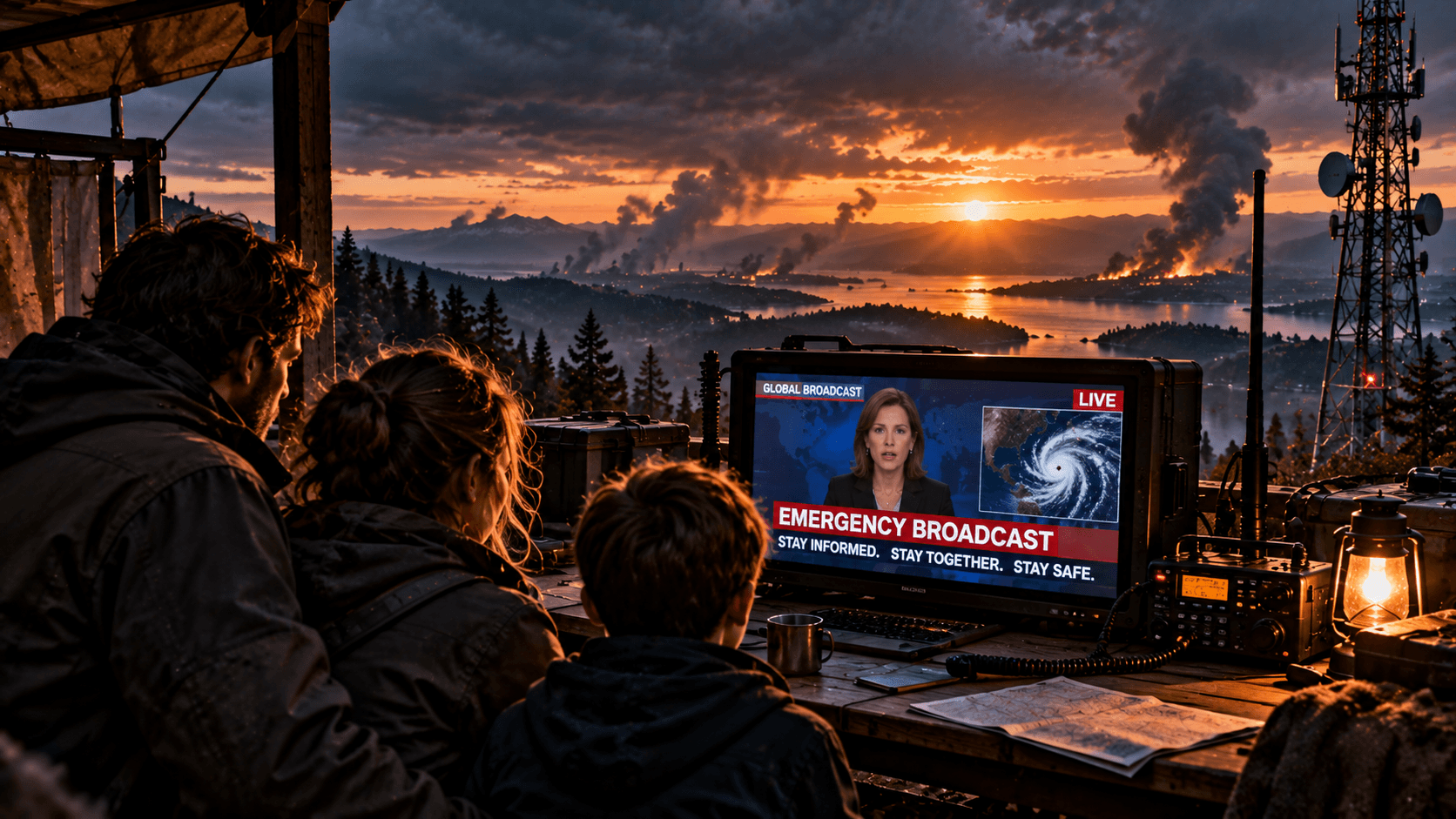
Outside, the world was moving in the opposite direction: faster, louder, less comprehensible. The radio caught a station for only a few minutes at a time. One evening a broadcast reported that fighting had spread beyond the Taiwan Strait and that strikes on ports across the western Pacific had interrupted shipping. The next morning another voice described major combat on the Korean Peninsula and emergency mobilization in Japan. A third spoke of European governments imposing internal movement controls after a series of border incidents and infrastructure attacks. They could not verify every report. But the different voices were beginning to tell the same story: governments were making decisions for their own survival, and the distance between a local emergency and an international one was disappearing.
The father kept a notebook of what they heard. He wrote dates when he knew them and question marks when he did not. Rumors of fighting across Southeast Asia came without reliable locations. A report of unrest in several Australian cities was repeated as national anarchy by a caller who offered no source. The United States was said to be facing armed confrontations between domestic groups, with violence spilling across parts of the Mexican border. The father crossed out one entry after a later bulletin contradicted it. Even now, he refused to let fear turn every rumor into a fact.
But the confirmed news was bad enough. Fuel shipments had been redirected. Emergency food reserves were being restricted. Refugee movements were overwhelming towns that had once advertised themselves as places to escape to. In parts of Africa, wars already years old had widened as outside support and humanitarian deliveries faltered. The daughter listened from the table, her hands wrapped around a mug of warm water, and asked whether anyone was still trying to stop it. The father said he was sure people were. He could not say who was succeeding.
They learned the building slowly. A maintenance room contained diagrams of the solar system, but one inverter shut down whenever they tried to run too many appliances. They settled on a strict routine: charge radios and lamps during daylight, use one heated room when power allowed, keep the other units closed, and melt snow only after filtering and boiling it. They found an outdoor water storage tank, but its lines had frozen. The son spent an afternoon tracing pipes through a crawl space and emerged with scraped hands and the news that they might be able to thaw one section if they protected it from freezing again.
The first week ended with a meal eaten together at the hotel restaurant's smallest table. There was soup, a little bread from the freezer, and the remains of a jar of jam. No one called it a celebration. Yet when his daughter laughed at something her brother said, the father felt an almost unbearable gratitude. He had spent so long trying to reach her that he had forgotten the ordinary sound of them together.
The following morning, they found fresh tracks near the lower gondola tower.
They were not animal tracks. Someone had come partway up the mountain and turned back. The father followed them only as far as the first bend, where the wind had already begun to fill the impressions. He returned without telling the children what he had imagined: a group looking for supplies, another family seeking shelter, someone who would see the hotel lights and decide the place belonged to them. He told them the truth instead. There had been someone below. They needed to be careful. The hotel was not invisible.
His son asked whether they would turn people away, as the towns below had turned them away. The father had no answer ready. He knew the food was finite. He knew what it had felt like to stand outside a gate while someone else decided they were a burden. He said they would make that decision when they knew who was coming, not before. It was the closest he could come to a promise.
Winter settled in fully. Snow pressed against the lower windows. A storm tore a section of flashing from the cafeteria roof. The batteries sometimes lasted through the night and sometimes did not. Their small stock of fuel had to be guarded against the temptation to use it for comfort. They began moving their supplies into a single storeroom in the hotel and marking each container with a date. The daughter insisted on keeping the first-aid equipment in a separate, accessible cabinet. The son devised a schedule for checking the roofs, the pipes and the route down to the hidden SUV, though they had stopped believing the vehicle could be reached quickly.
One evening, after several days of static, the radio carried a calm voice announcing that a nuclear weapon had been used overseas. The broadcast gave a location, then lost the signal before naming a source. They sat in silence until another station confirmed an explosion but disputed its nature. The father wrote both accounts in the notebook. For the first time he did not want to turn the page.
The children asked what it meant for Canada. He said the truth: he did not know. A distant detonation did not mean missiles were headed toward them. It did mean that a boundary the world had spent generations trying to preserve might have been crossed. And if that happened once, the next decision could come faster, made by people who had even less time to think.
That night, he walked through the hotel alone. Six empty rooms. A kitchen stocked for weeks, perhaps longer if they were careful. Solar panels under snow. A basement used for storage, its concrete walls cool and dry. He paused at the stairs and considered what would have to be carried down if they ever needed to shelter there. Water. Food. Blankets. Medicine. The radio. A light that did not depend on the building.
He had brought his children to the mountain because he believed it was far enough from the world to be safe. Standing above the dark basement, he began to understand that distance might protect them from some dangers while leaving them utterly exposed to others.
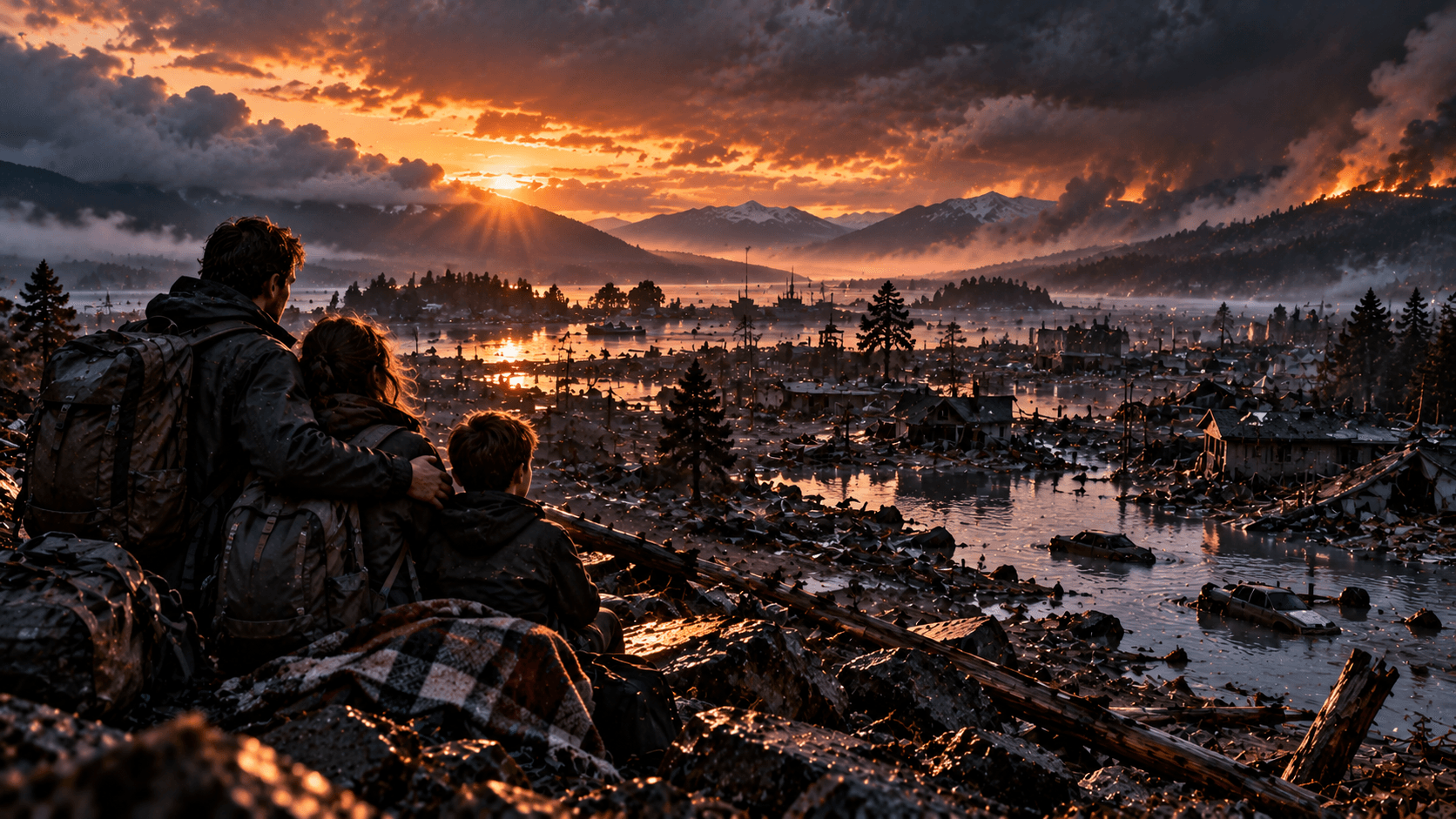
At the summit, the wind rose again, and the hotel shuddered under its weight. Beyond the mountains, the world kept changing. For now, they had a roof, a little food, and each other. The father wrote one final line in his notebook before turning out the lamp: We have found shelter. We have not found safety.
Editorial continuity note
Speculative fiction. The hotel, chalet, cafeteria, first-aid building, solar system, hidden SUV and family relationships follow the foundational dream account. Fictional global reports are deliberately attributed to fragmentary broadcasts; no claims are presented as real 2026 events. The nuclear report remains unconfirmed within the narrative, setting up the next installment.