Speculative Fiction
Article 18ACT IV · A FUTURE THAT DID NOT HAPPEN
The Last Broadcast
AI-generated illustration. Not a photograph of a real event.
SPECULATIVE FICTION — This dispatch describes imagined future events, not actual news.
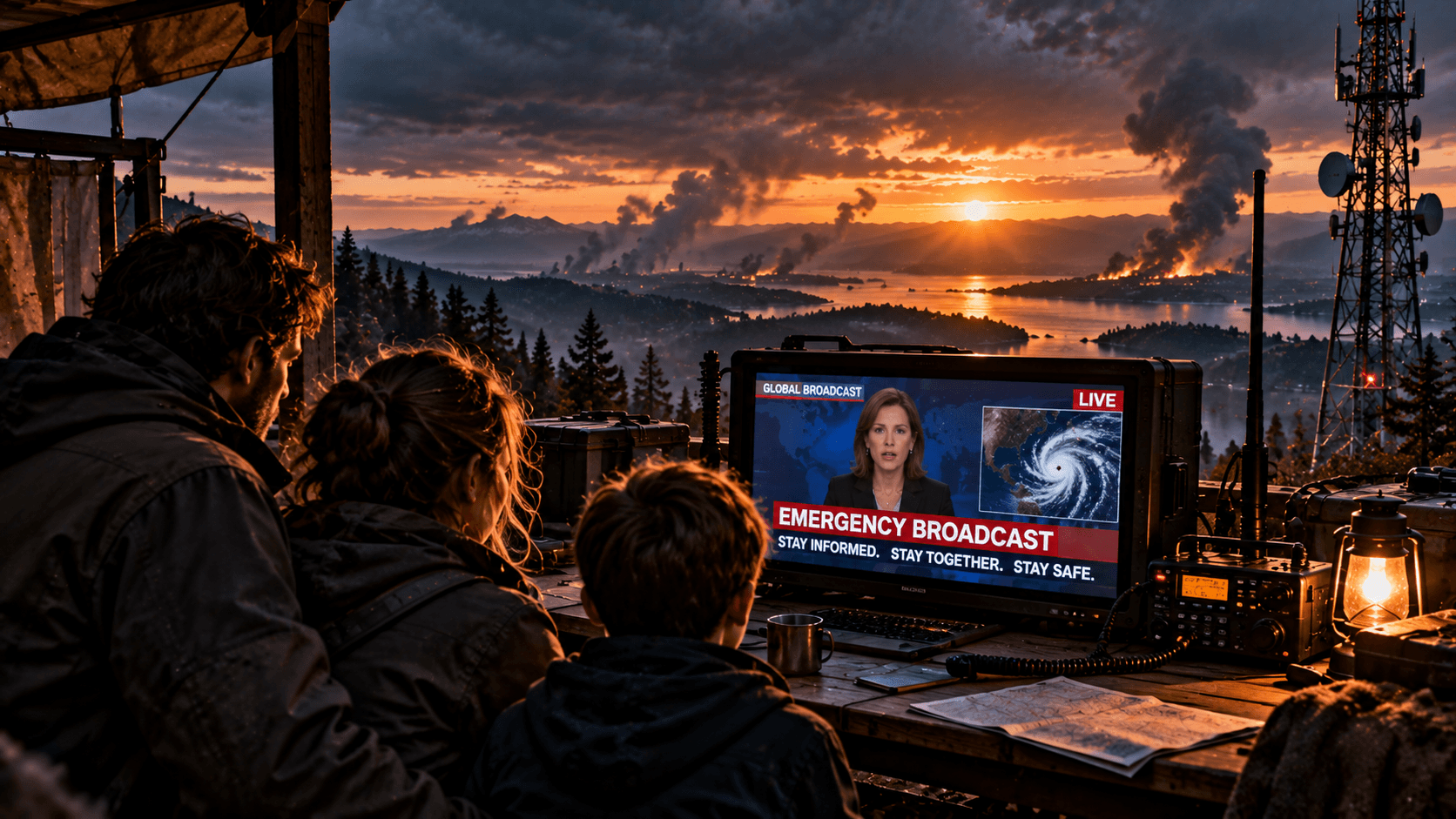
The first time the radio named a city destroyed by a nuclear weapon, the father wrote the name down twice. The first spelling came from a station whose signal broke beneath the wind. The second came an hour later, from a voice speaking so quietly that his son turned up the volume until static filled the hotel dining room.
The reports did not agree on the size of the explosion or the number of people killed. One called it a military strike. Another said it had destroyed civilian neighborhoods. A third broadcast insisted the footage circulating on emergency channels was fabricated. The father had no way to settle the argument. What frightened him was that the argument itself had become almost ordinary.
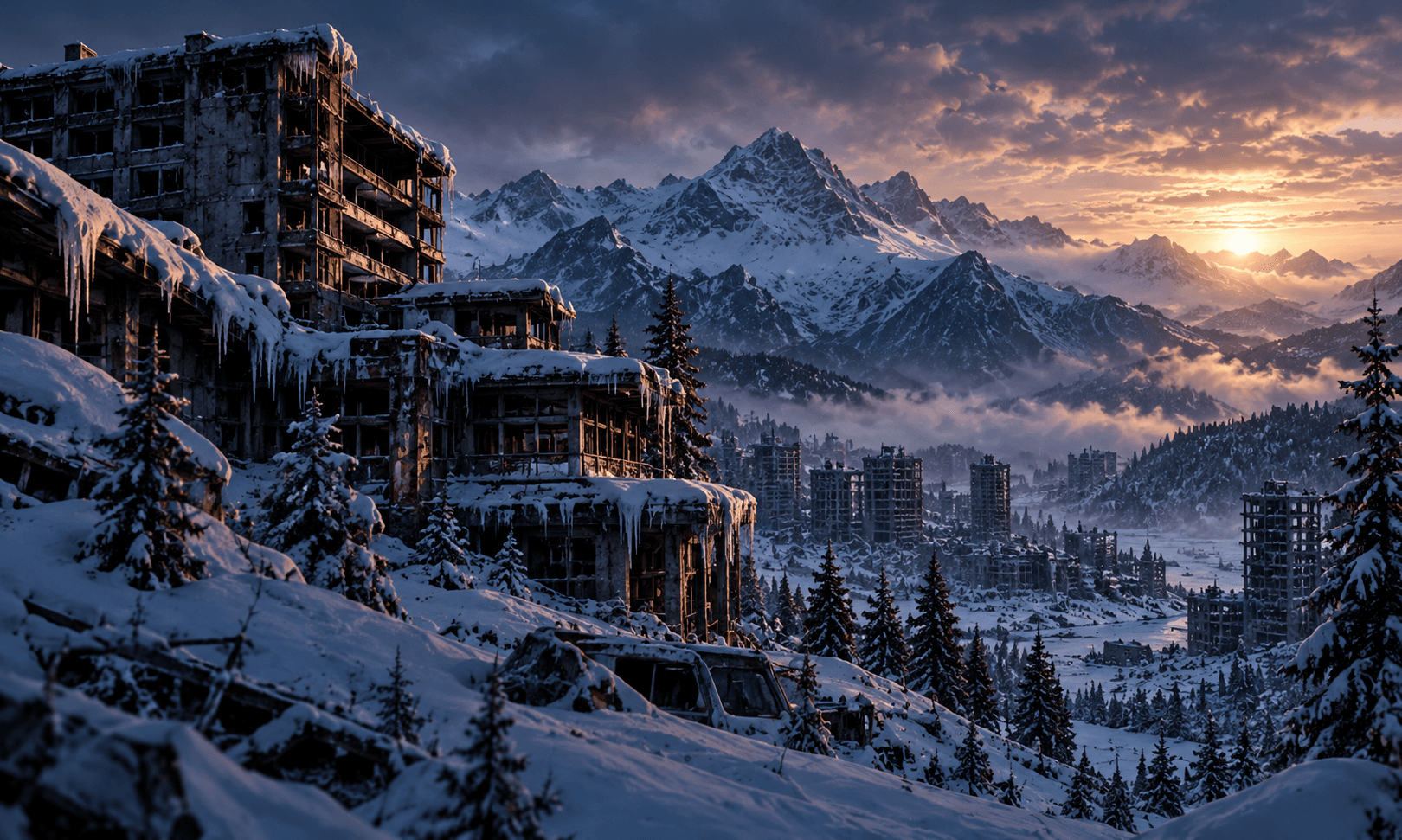
Outside, snow buried the lower windows. Inside, the family had made a life measured in small quantities: hours of battery charge, litres of treated water, meals remaining, wood that might burn too quickly. His daughter had marked a calendar on the kitchen wall. His son had repaired a loose seal on the cold-room door and was trying to keep one battery from losing its charge overnight. Their days had become an exercise in preserving things the world below had once supplied without asking.
Then came the broadcasts that made the mountain feel suddenly less remote.
Fighting in the Pacific had widened beyond the original confrontation over Taiwan. Ships carrying fuel and food were being turned away from ports or held offshore for inspections that never seemed to end. Reports from the Korean Peninsula spoke of strikes near densely populated cities and emergency movements of civilians. Japanese authorities were preparing additional shelters and air defenses. Across Southeast Asia, radio stations carried contradictory accounts of border closures, attacks and mobilizations. The family could no longer tell which governments still controlled the roads that appeared on their old maps.
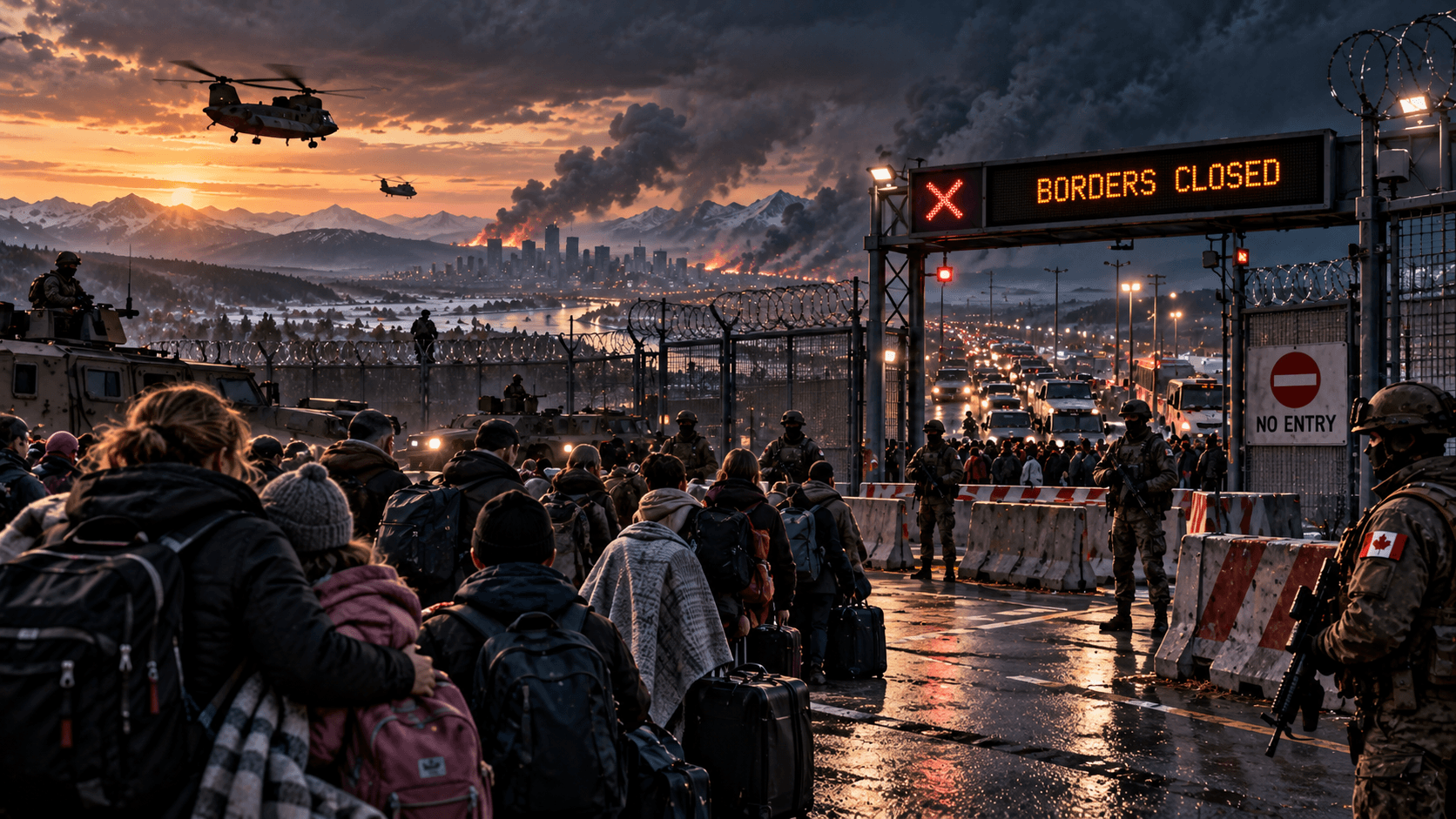
The father listened for Canada in every bulletin. Most nights there was nothing. When a Canadian station finally broke through, it was discussing fuel rationing, intermittent rail service and regional emergency orders. The announcer spoke of communities accepting displaced families and others restricting entry. Somewhere a mayor appealed for calm. Somewhere else a caller accused officials of hiding food. Then the signal slipped away, leaving the room with the sound of the refrigerator compressor struggling to restart.
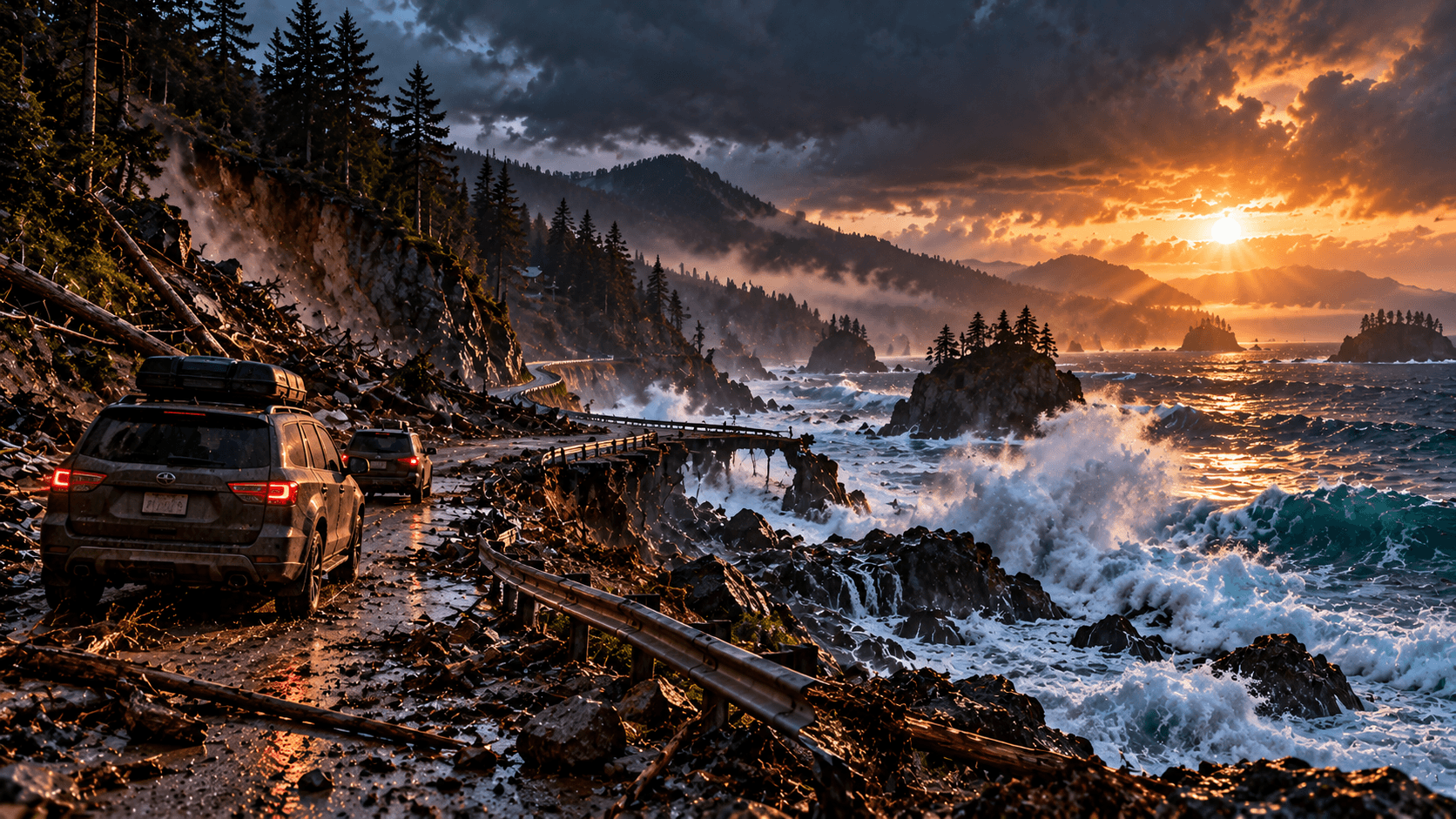
His son asked whether they should try to leave before the snow made the descent impossible. The question was sensible. The resort was not a fortress. A blocked access road could trap them; a failed inverter could leave them without light; an injury could become fatal if the first-aid supplies ran out. But the SUV was concealed far below, and the settlements they had passed through had already been refusing newcomers. Leaving meant surrendering the shelter they had spent weeks making habitable for the possibility of finding another.
“Where would we go?” the daughter asked. No one answered.
They began preparing the basement anyway. It was the one part of the hotel with substantial concrete around it, though no one pretended it was a purpose-built fallout shelter. They moved drinking water, shelf-stable food, blankets, a battery lamp, the radio and a basic medical kit downstairs. They cleared a place away from windows and exterior openings. The father checked the ventilation and wrote down what they still lacked. The list grew faster than the supplies.
He remembered a number from some long-ago conversation: one hundred, perhaps one hundred and twenty kilometres. That was how far he thought the resort might be from Calgary, though he could no longer be sure. In the dreamlike arithmetic of fear, distance began to feel like an answer. He knew it was not. A nuclear explosion did not have a single safe radius, and fallout could travel according to wind and weather. The basement might help them shelter from radioactive material. It could not promise survival, and the father refused to make that promise to his children.
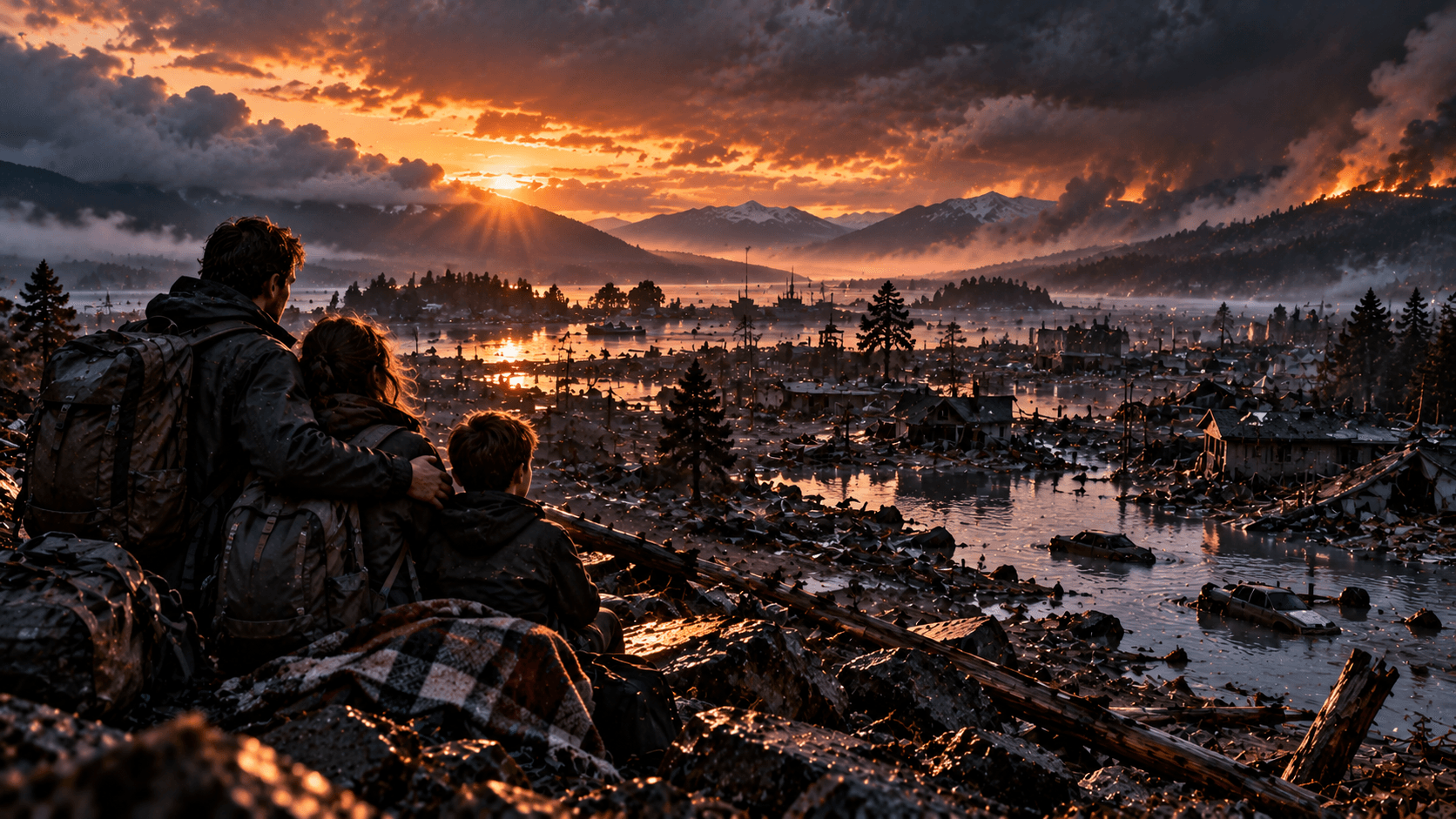
The most painful conversations were not about bombs. They were about ordinary things. His daughter wanted to know whether her friends had made it off the island. His son wondered whether the man who sold them the boat was still alive. They spoke of a favorite meal, of summer evenings, of a movie they had meant to watch together. They were not avoiding the catastrophe so much as trying to remember that their lives had once been larger than it.
One afternoon, the son found new tracks below the gondola station. The impressions were partly covered by snow, but there were two sets this time, not one. They followed the path toward the summit before turning downhill. No one had approached the hotel. No note had been left. The father stared at the tracks until the wind erased their edges.
His daughter asked whether they would open the door if strangers came. He thought of the woman with the bucket who had turned them away, and of the boat owner who had shown them the controls despite refusing to cross. The world had not divided neatly into good people and bad people. It had divided into people with something left to share and people afraid of losing it. He told his children they would decide together. That answer was less reassuring than a rule, but it was the only honest one.
The next broadcast arrived just before dusk. A regional station, weak but recognizable, reported that military commanders in several countries had placed strategic forces on heightened alert. It named no Canadian target. It quoted officials urging the public not to spread rumors. Then another transmission interrupted with an unverified claim of a second nuclear strike overseas. For the first time, the father stopped writing in his notebook. There were too many claims, too few sources and no reliable way to know what had already happened.
By morning the radio carried a voice from somewhere farther east, speaking of retaliatory strikes and emergency measures. It was impossible to know whether the message was hours old or days old. The family listened to it twice before the station vanished. Later, they heard a fragment about a possible attack on North American infrastructure. No location followed. The son asked whether Calgary would be considered important because of its energy industry. The father said that importance was not the same as a verified target list. They had no list, no warning from Canadian authorities, and no reason to pretend otherwise.
Still, they carried more water into the basement.
The father had once believed that being informed meant having enough facts to choose wisely. Now information came as fragments: a warning without a time, an image without a source, a location without confirmation. Every decision demanded confidence that the evidence could not provide. The terrible luxury of ordinary life, he realized, had been the ability to wait until tomorrow for a better answer.
On the final evening of the storm, they ate together in the hotel kitchen. The daughter insisted they use the last packet of hot chocolate. Her brother protested that it was wasteful, then divided it into three cups with exaggerated care. For a few minutes they argued about who had received more. The father watched them and said nothing. He wanted to keep that small argument exactly as it was.
The radio crackled on the counter. A burst of static gave way to a strained voice reading what sounded like an emergency advisory. The words were broken by interference: western Canada, possible incoming missiles, seek immediate shelter. A second voice began repeating a frequency. Then there was only static.
The father reached for the notebook. His hand stopped halfway. He did not know whether the warning was authentic, whether it was current, or whether the city named in his fears was in danger at all. But he knew they had prepared for a moment when uncertainty itself would leave them no time.
“Downstairs,” he said.
His son took the radio. His daughter carried the lamp. They descended together into the basement, leaving three unfinished cups on the kitchen table. Above them, the wind pressed against the hotel windows. Somewhere beyond the mountain, a world they could no longer hear clearly was making decisions they could not influence.
The father closed the basement door. They waited for the next message. None came.
Editorial continuity note
This is speculative fiction. The overseas nuclear reports, emergency broadcasts and possible missile warning are imagined and deliberately unreliable within the story. The family remains together at the six-unit mountain hotel; the basement is an improvised shelter, not a guaranteed refuge. Article 19 can resolve the warning and its immediate consequences without retroactively treating rumors as confirmed events.