Speculative Fiction
Article 14ACT IV · A FUTURE THAT DID NOT HAPPEN
The Borders That Closed
A dispatch from an imagined future
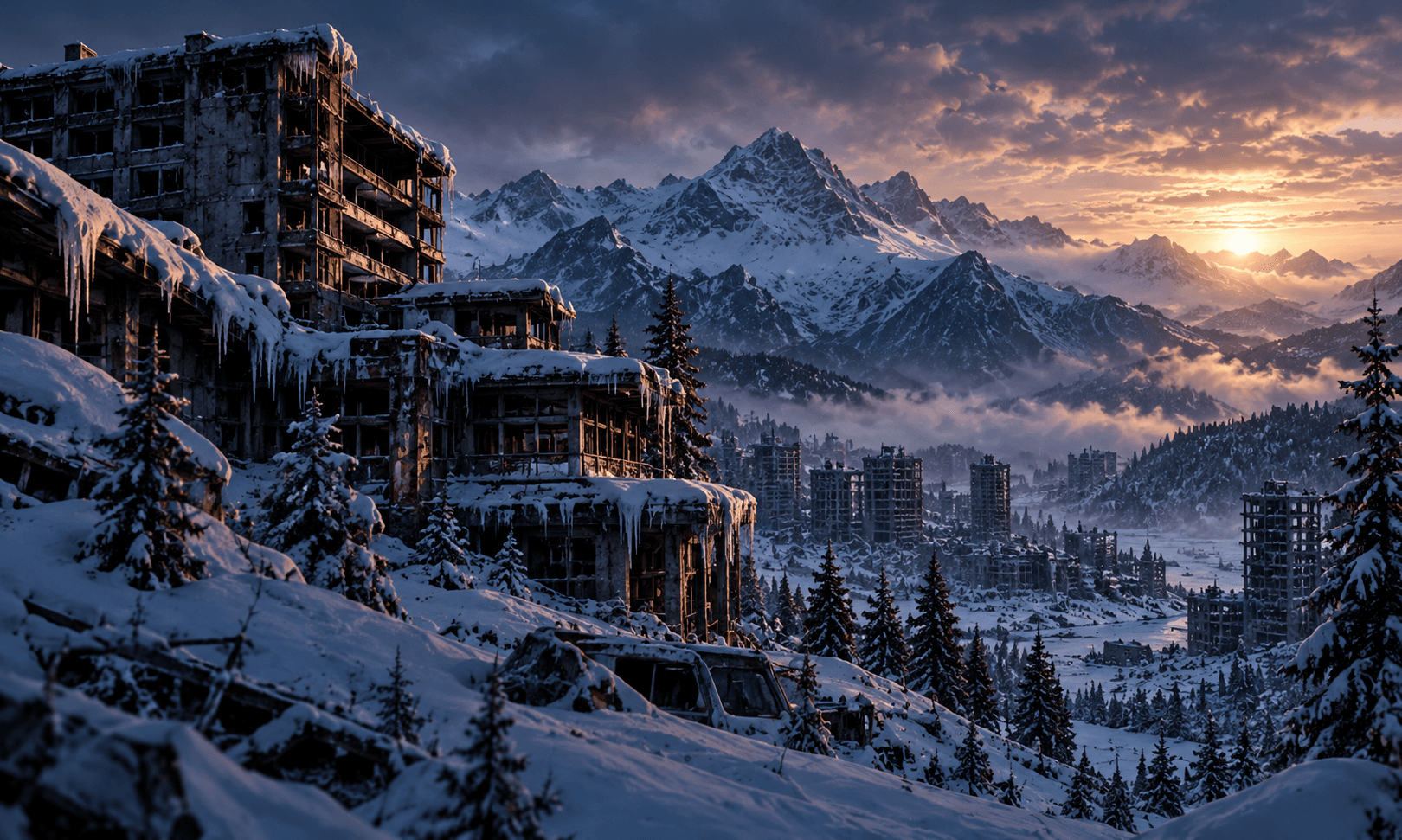
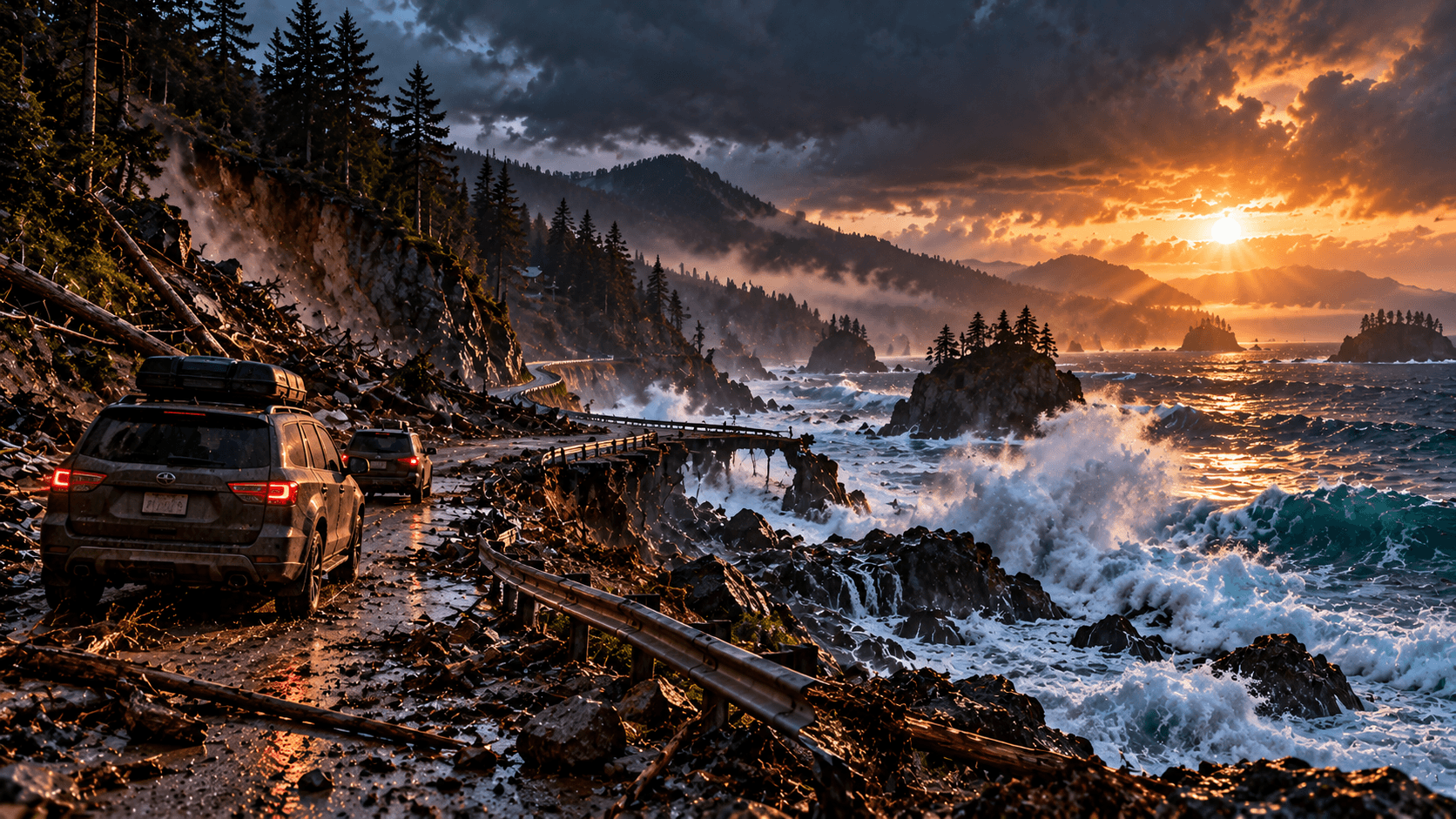
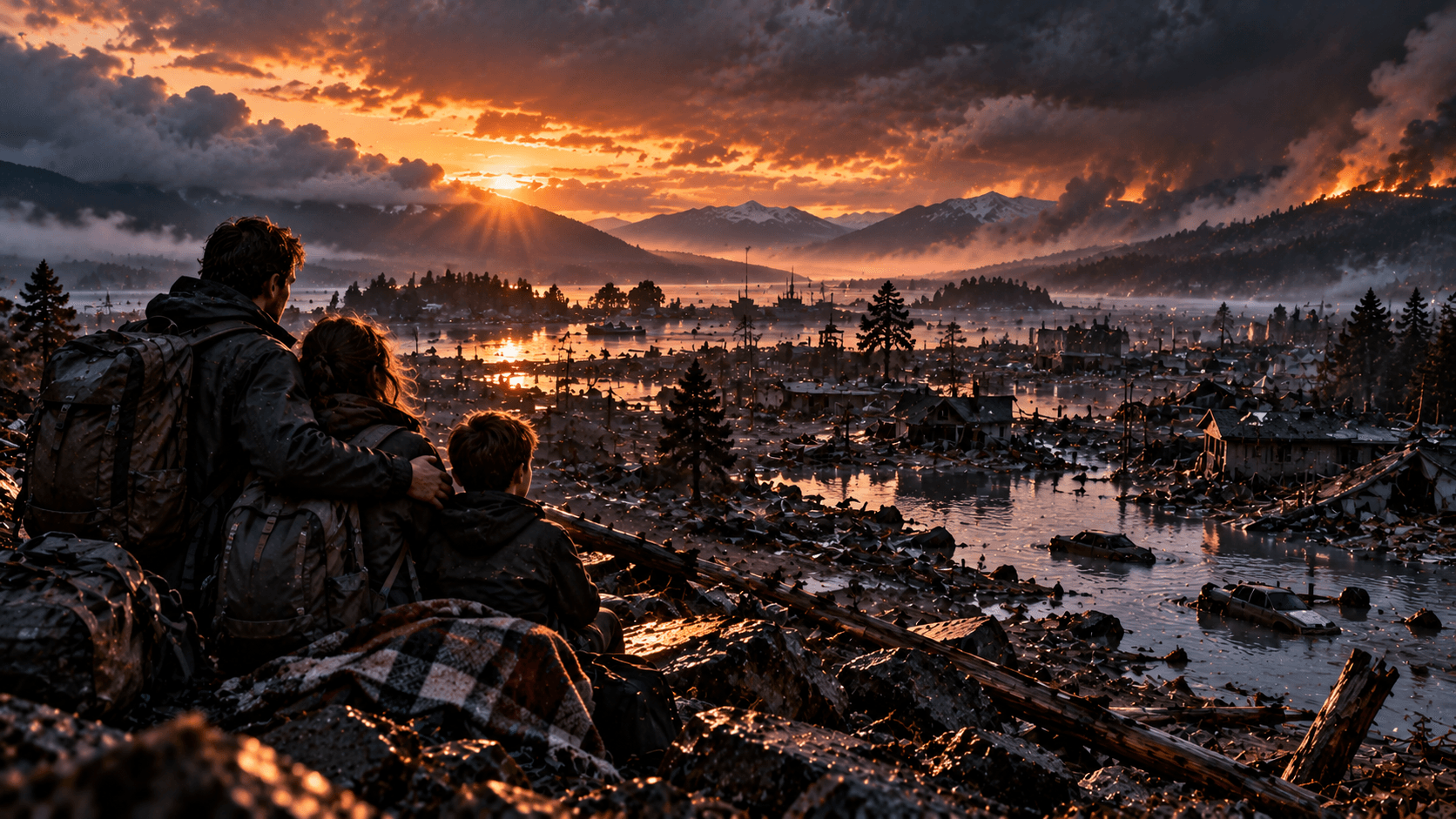
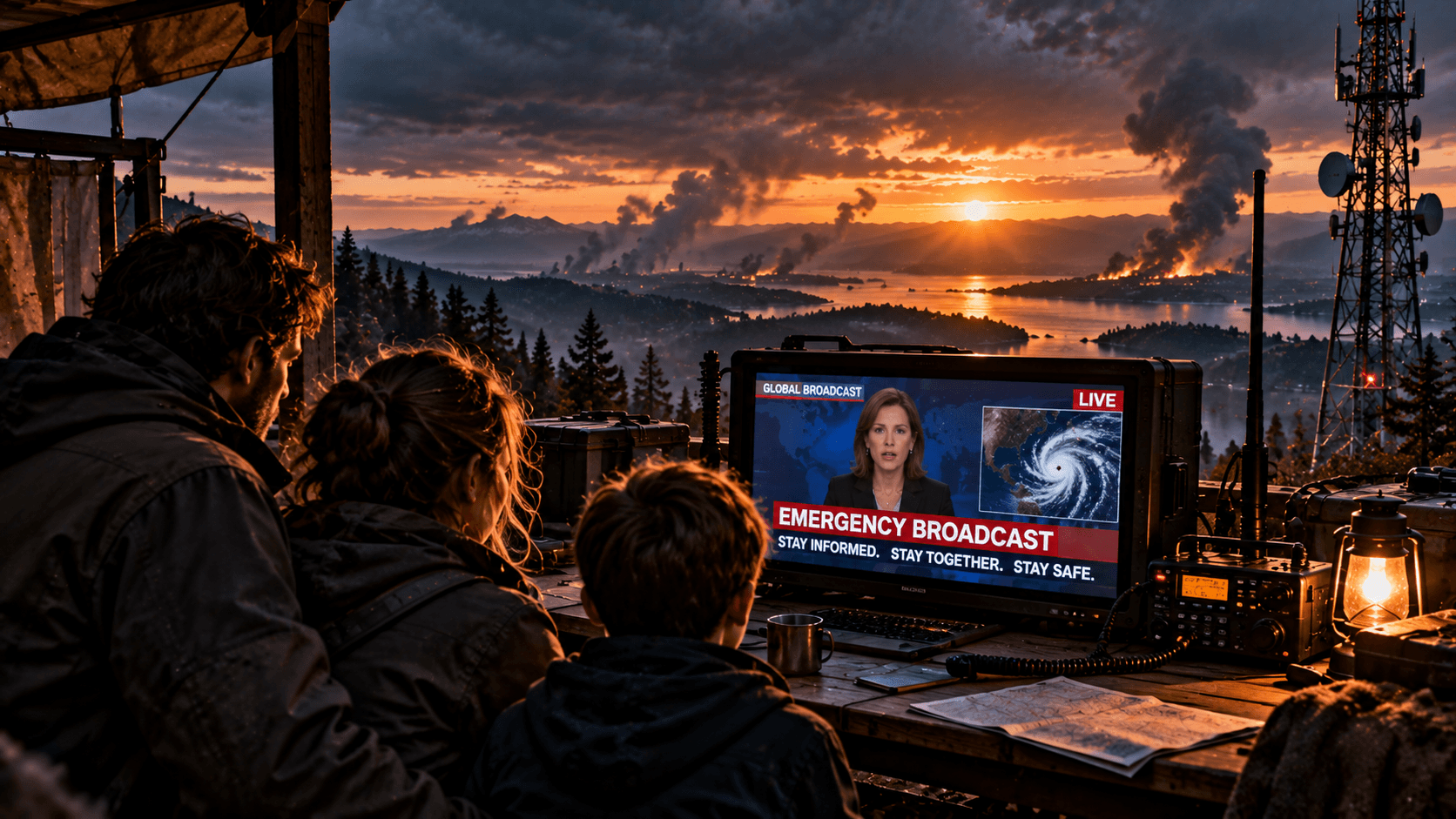
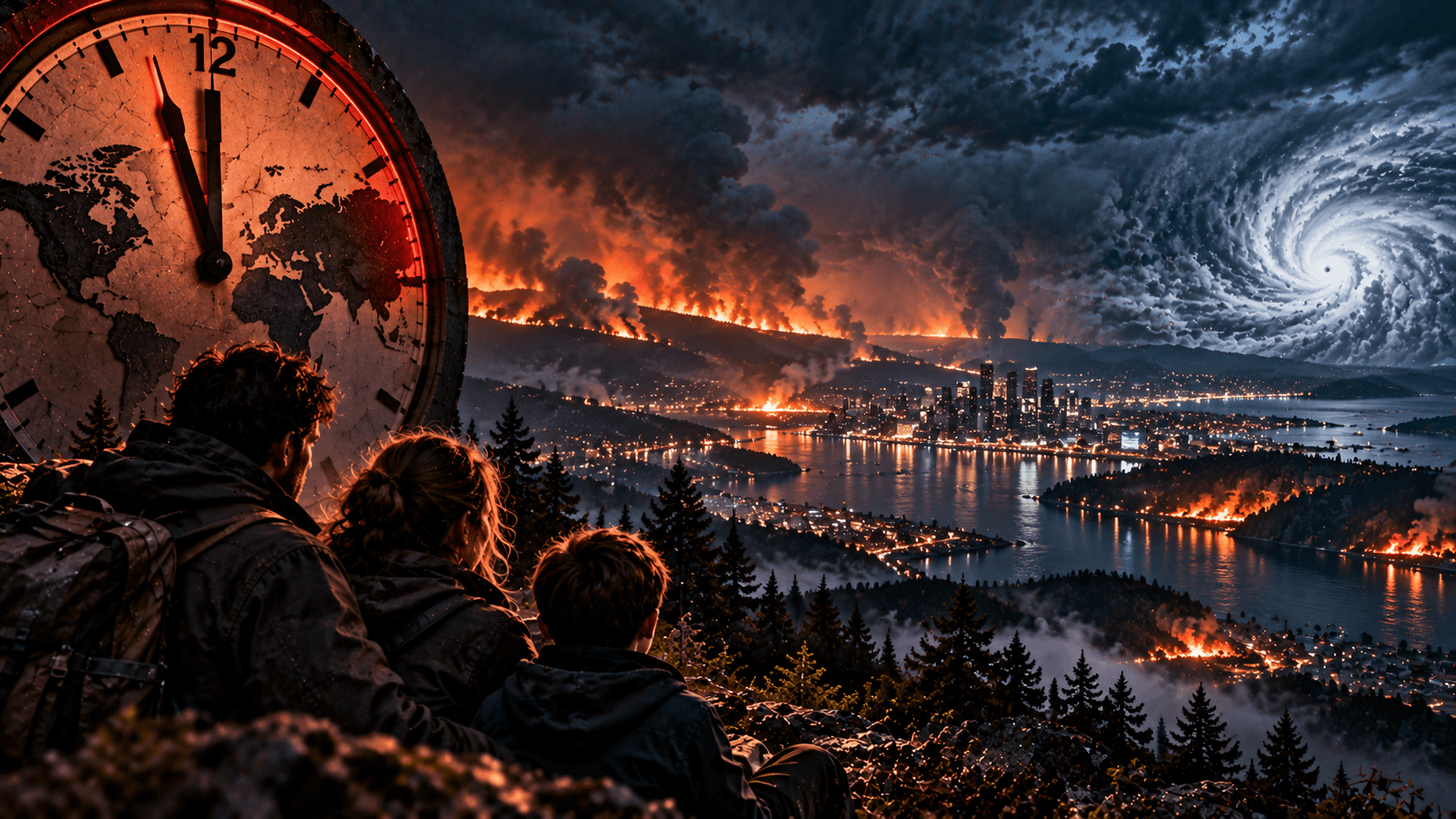
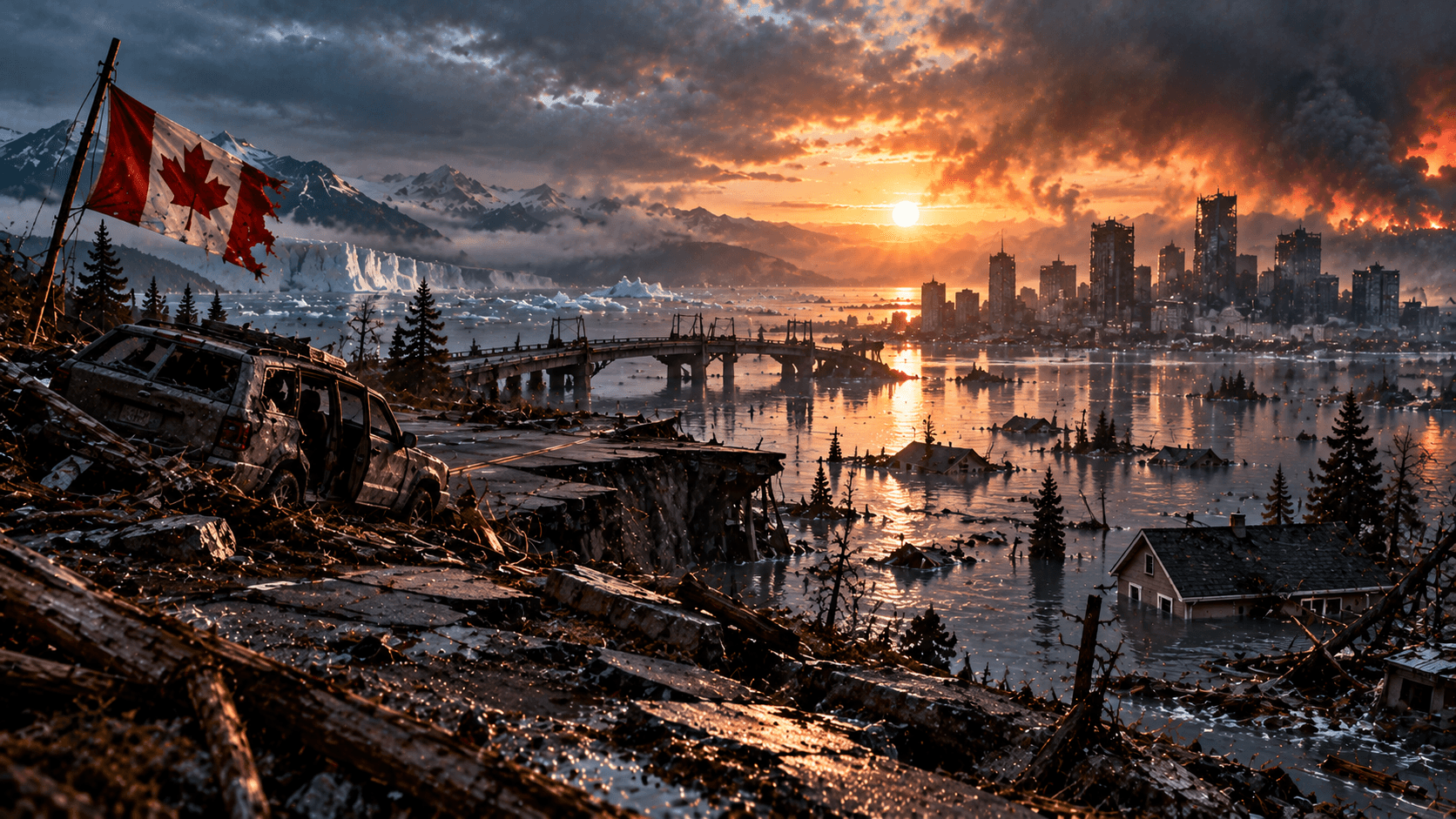
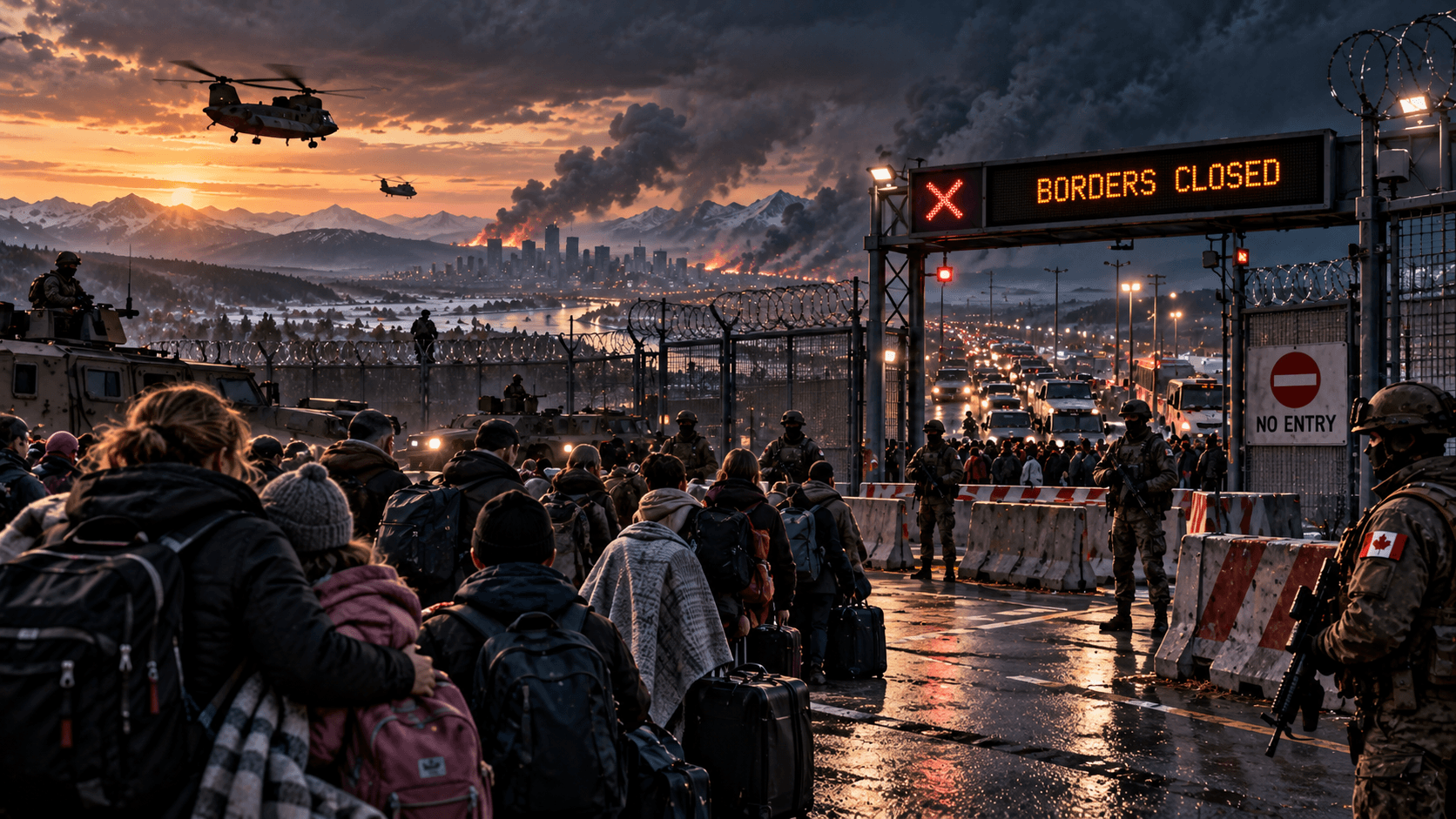
AI-generated illustration. Not a photograph of a real event.
SPECULATIVE FICTION — This dispatch describes an imagined future. Its events, official statements, and characters are fictional.
The first border to close was not a national one. It was the narrow space between a family and the person they needed to reach.
On the fifth morning of the Pacific emergency, a father and his son stood in a kitchen in western Canada and watched a call fail for the eleventh time. The daughter they were trying to reach was twenty, attending university on Vancouver Island. The last message from her had arrived the previous evening: classes suspended, the campus advising students to stay nearby, ferry service uncertain. She had written that she was safe. She had not said for how long.
Across the Pacific, the maritime inspection zone around Taiwan had become a blockade in everything but the language used to describe it. Some ships were detained, others diverted. Aircraft flew armed patrols over waters once crowded by ordinary commercial traffic. Governments argued about whether the restrictions constituted an act of war. Captains made their own decision: they stopped sailing into them.
The consequence arrived first as absence. An electronics plant in Malaysia idled a production line because a component had not arrived. A hospital purchasing manager in Canada was told that replacement equipment had no confirmed delivery date. A Japanese shipping company cancelled routes it had operated for decades. The missing goods were different; the cause was the same. Distance had become a liability.
Then the Korean Peninsula erupted. A second artillery exchange killed soldiers on both sides of the border. A missile fired into the sea triggered emergency alerts in Japan. South Korean authorities opened public shelters, while North Korean broadcasts threatened retaliation for any foreign intervention. China urged restraint in public and moved additional forces toward its northeastern frontier. No government announced a regional war. Every government prepared as though one might already have begun.
In the South China Sea, rival patrol vessels shadowed one another near disputed waters. Vietnam placed coastal units on alert. The Philippines reported an encounter between armed ships. Thailand and Cambodia exchanged accusations after an unrelated border incident. Each confrontation had its own history; the danger was that commanders, markets and frightened populations were beginning to read them as pieces of a single war.
The wider world responded with an old instinct: secure what you can, before someone else does. Export restrictions appeared on selected industrial materials. Ports gave priority to government shipments. Airlines suspended services not because every runway was unsafe, but because insurers, crews and air-traffic planners could no longer agree on acceptable routes. Officially, borders remained open. Practically, fewer people could cross them.
The father and son discovered this when they tried to book passage west. A flight was cancelled after payment had cleared. A rental agency had vehicles but would not guarantee a return route. Ferry information changed between the time it was posted and the time they reached the terminal by phone. They were not fleeing a battlefield. They were trying to reach a member of their family in a country that still described itself as safe.
The father filled the SUV with fuel before the station imposed a purchase limit. His son loaded bottled water, winter clothing, medication, batteries and food they could eat without cooking. They argued briefly about what to leave behind. The son wanted more blankets. The father wanted room for his daughter and whatever she could carry. Neither said aloud what they were both thinking: that the journey might not end with a return home.
By afternoon, the news was harder to trust. A purported evacuation order for Vancouver Island spread online, followed by a government denial. A video showed a coastal road splitting open, but no one could verify when or where it had been recorded. Rumors of earthquakes moved faster than the seismic bulletins. There had been tremors in the region; there was no confirmed report that the island was sinking. In a crisis, however, an unverified warning can change a family's decisions long before it is corrected.
The father called the university. A recorded message referred him to an emergency webpage that would not load. He called the daughter's residence. No answer. Finally, an unfamiliar number connected for less than a minute. He heard her voice beneath a wash of static. She was still on the island. The campus had lost power in one building. She was staying with other students. Then the call ended.
That was enough. They left before sunrise the next day.
Meanwhile, diplomats met behind closed doors in capitals separated by oceans. Some were trying to reopen shipping corridors; others were negotiating military withdrawals or emergency access for civilians. Their work mattered. But the pace of negotiation had fallen behind the pace of private decisions. Families had begun leaving. Employers were closing. Communities were rationing. The machinery of everyday life was reorganizing itself around fear.
As the SUV crossed the first mountain pass, the son asked whether they should turn back if the ferries stopped. His father looked at the fuel gauge, then at the road ahead. He did not have an answer that would make either of them feel better.
For decades, borders had been lines that governments argued over and ordinary people crossed. Now they were appearing everywhere: at a shipping lane, at a fuel pump, at the entrance to a crowded shelter, at the edge of a mobile network's reach. The most frightening border of all was the one between knowing that someone you loved was alive and being able to get to them.
And on that road west, with the mountains rising around them and the radio dissolving into static, two people were beginning to understand how quickly that distance could become impossible to cross.
Story continuity and grounding
The Pacific military developments, family scenes, travel restrictions and emergency messages above are invented. The fictional maritime and supply-chain mechanisms are informed by publicly documented Taiwan Strait trade dependencies and blockade analyses; these are background research, not confirmation that the imagined events occurred.
Background: CSIS, “Troubled Straits: Analyzing Trade Chokepoints in the South China Sea” (1 July 2026), https://www.csis.org/analysis/south-china-sea-trade-chokepoints (opens in a new tab)
Background: MIT Center for International Studies / CSIS, “Lights Out? Wargaming a Chinese Blockade of Taiwan” (31 July 2025), https://cis.mit.edu/news/lights-out-wargaming-chinese-blockade-taiwan (opens in a new tab)
Continuity: The father and son remain together. The daughter is still on Vancouver Island; no rescue or Cascadia catastrophe has yet been depicted. The next installment can follow their journey toward a crossing and escalating disruptions.